

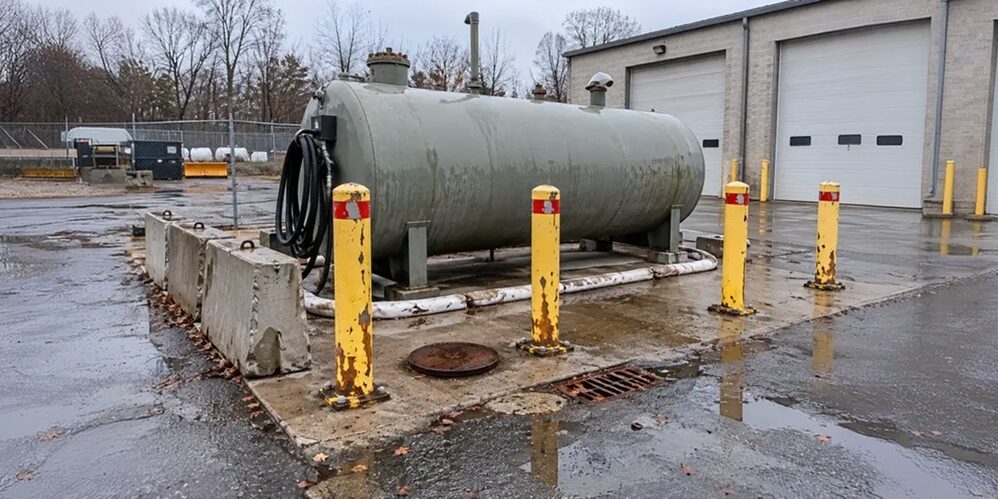
If your facility stores oil, whether diesel for generators, hydraulic oil, lube oil, transformer oil or fuel for a fleet, there is a good chance federal law requires a Spill Prevention, Control, and Countermeasure (SPCC) plan. Many facilities that need one don’t have one, or have a plan that hasn’t been updated in years. This guide from Environmental Remediation Contractor (ERC) explains when an SPCC plan is required, what it must include and how to stay in compliance.
What Is an SPCC Plan?
An SPCC plan is a written, facility-specific plan that shows how you prevent oil spills, contain them if they happen and respond. It comes from the EPA’s Oil Pollution Prevention regulation (40 CFR Part 112), one of the main federal oil storage regulations. The rule applies to many kinds of oil, including gasoline, diesel, crude, hydraulic and lubricating oil, vegetable oil and animal fat.
When Is an SPCC Plan Required?
A facility needs an SPCC plan when it meets all three of these conditions:
- It is non-transportation related: This covers fixed facilities such as plants, warehouses, utilities, farms, construction sites, data centers and fleet yards.
- It stores enough oil: More than 1,320 gallons of total aboveground storage capacity, or more than 42,000 gallons of completely buried storage capacity. Only containers of 55 gallons or larger count, and you count the container’s capacity, not how full it is.
- A spill could reach water: There is a reasonable expectation that an oil discharge could reach navigable waters or adjoining shorelines, including through storm drains, ditches and streams.
The third test is broader than most people expect. A facility several miles from a river can still qualify if a spill could travel through a storm sewer or drainage ditch, and the decision has to ignore man-made structures such as dikes or berms that might stop it.
Tier I, Tier II or a Full Plan?
Smaller facilities may qualify as a “qualified facility” and use a simpler plan.
| Plan type | Who it applies to | Who certifies it |
| Tier I qualified facility | 10,000 gallons or less of aboveground oil storage, no single container over 5,000 gallons, and a clean spill history | Owner self-certifies using EPA’s template |
| Tier II qualified facility | 10,000 gallons or less of aboveground storage, with at least one container over 5,000 gallons, and a clean spill history | Owner self-certifies a site-specific plan |
| Full SPCC plan | Everyone else | A licensed Professional Engineer (PE) |
A “clean spill history” means that in the three years before the plan is certified, the facility has not had a single discharge to water of more than 1,000 gallons, or two discharges of more than 42 gallons each within any 12-month period.
SPCC Plan Requirements: What It Must Include
Every SPCC plan must describe the facility and its oil storage, and show how it meets the rule. Core SPCC plan requirements include:
- A site diagram showing every oil container, its capacity and contents
- Secondary containment (dikes, berms, double-walled tanks or containment pallets) sized for the largest container plus a margin for rain where needed
- Overfill prevention and procedures for loading and unloading
- Regular inspections and integrity testing of tanks and piping, with records kept for three years
- Training for oil-handling employees, at least once a year
- Security measures such as locked valves and lighting
- Spill reporting procedures and emergency contact numbers
- Countermeasures: how spills will be contained, recovered and cleaned up, including outside response contractors
SPCC Deadlines You Can't Miss
- New facilities must prepare and implement a plan before they begin operating.
- Every five years, the plan must be reviewed and evaluated, and amended within six months if needed.
- After any change that materially affects spill potential, such as adding a tank, replacing piping or changing operations, the plan must be amended within six months, with the change implemented within six months of the amendment.
- After a spill, facilities that have a discharge above the reporting thresholds must send information to EPA within 60 days.
Common SPCC Compliance Gaps
When facilities call ERC after a spill or an inspection, the same gaps come up again and again:
- Uncounted containers. Generator belly tanks, oil-filled electrical equipment, used oil drums and totes all count toward the 1,320-gallon threshold if they hold 55 gallons or more.
- Missing secondary containment for drums, totes and mobile containers, or containment that is full of rainwater.
- An out-of-date site diagram that doesn’t show tanks added or removed since the plan was written.
- No inspection records. Inspections may happen, but without written records they don’t count.
- Training that isn’t documented for employees who handle oil.
- No named response contractor or out-of-date emergency phone numbers.
- Plans never reviewed after five years, or after a change in operations.
Most of these are inexpensive to fix before an inspection and costly to explain after a spill.
SPCC Compliance Is Environmental Risk Management
An SPCC plan is more than paperwork. It is one of the most practical safety and environmental risk management tools a facility has, because it forces three things: knowing exactly what oil is on site, containing it properly and having a response ready before anything leaks. Facilities that treat SPCC compliance as a box to tick often find gaps only during an inspection or, worse, during a spill. EPA can issue significant civil penalties for missing or outdated plans.
How ERC Supports SPCC Facilities
An SPCC plan names who will respond if oil is released. That is where ERC comes in. We help facilities with the physical side of compliance and the response the plan depends on:
- 24/7 spill response. Our emergency response team contains, recovers and cleans up oil releases. Facilities can put a response agreement in place ahead of time through our emergency spill response agreement.
- Tank work. Removing, replacing or closing underground and aboveground storage tanks when storage changes.
- Cleanup after a release. Soil remediation, vacuum truck services and proper waste disposal.
- Trained crews. Every responder completes 40-hour HAZWOPER training and an annual refresher.
If oil does get out, our guide to the first 24 hours of a spill explains what to expect. For Ohio facilities, reportable releases must also go to the Ohio EPA spill hotline at 800-282-9378, and releases to water to the National Response Center at 800-424-8802.
Need a spill response partner for your SPCC plan or help after an oil release? Call ERC 24/7 at 8776837724 or set up an emergency response agreement
Frequently Asked Questions
An SPCC plan is required when a non-transportation facility has more than 1,320 gallons of aboveground oil storage (counting containers of 55 gallons or more) or more than 42,000 gallons of completely buried storage, and a spill could reasonably reach navigable waters or shorelines.
A licensed Professional Engineer must certify a full SPCC plan. Qualified facilities with 10,000 gallons or less of aboveground storage and a clean spill history can self-certify a Tier I or Tier II plan.
The plan must be reviewed at least every five years and amended within six months of any change that materially affects the potential for an oil discharge.
Yes. The SPCC rule covers oil of any kind, including vegetable oils and animal fats, as well as petroleum products such as diesel, gasoline, hydraulic oil and lube oil.
EPA can issue civil penalties for missing, outdated or unimplemented plans. A facility without a plan is also less prepared to contain a spill, which increases cleanup costs and liability.
Facilities typically name a qualified spill response contractor in their plan. Environmental Remediation Contractor (ERC) provides 24/7 oil spill response, cleanup and remediation for facilities nationwide.
