

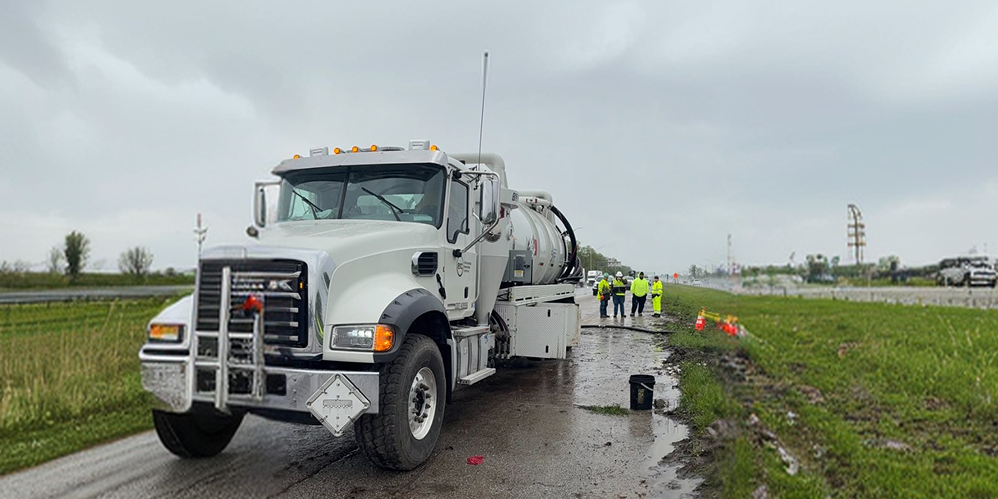
A vacuum truck is the unglamorous workhorse of industrial and environmental cleanup. When there’s liquid, sludge, or slurry that has to be moved from a place it shouldn’t be to a place it can be managed, this is usually the machine that does it.
The question we hear most is some version of “do we actually need one, and what should we know before we call?” This guide walks through what vacuum trucks do, how they’re used, and the decisions that matter before you book.
What a Vacuum Truck Is
A vacuum truck is a truck-mounted tank paired with a powerful vacuum pump and a hose. It pulls liquids, sludges, and slurries, and in some configurations dry solids, into the tank for transport and disposal.
Pump type matters. Liquid ring pumps, for example, handle wet and contaminated air or gas well and tolerate some particulate in the stream, which makes them well suited to demanding industrial work. Tank capacity, hose reach, and add-ons like pressure washers and tank-cleaning attachments determine what a given truck can actually do. ERC’s fleet includes a 1,180 CFM liquid ring vacuum truck, 3,000-gallon waste capacity units, 500-gallon power washers rated to 2,500 psi, and 360-degree tank-cleaning attachments commonly used for underground and aboveground storage tanks.
What Vacuum Trucks Are Used For
- Spill response: Recovering spilled fuel, oil, or chemicals from pavement, containment areas, or water. See our emergency response services.
- Tank and vessel cleaning: Removing sludge and residue from storage tanks, reactors, clarifiers, and boiler houses.
- Sumps, pits, and vaults: Pumping out and cleaning below-grade structures.
- Oil-water separators and catch basins: Routine cleanout of structures that fill with sediment and oil.
- Secondary containment: Removing accumulated rainwater or product from containment areas.
- Industrial cleaning: Clearing process areas, trenches, and equipment pits.
- Removing standing water from work areas or excavations.
Emergency vs. Scheduled Service
Emergency service means a release is happening or just happened, and every hour counts. Speed, 24/7 availability, and a crew already trained for hazardous materials are what you’re paying for.
Scheduled service is planned maintenance, such as cleaning a separator quarterly or pumping a sump before a shutdown. It’s cheaper, easier to plan around, and a good way to keep small issues from becoming emergencies.
Most facilities need both. Having a contractor you’ve already worked with, one who knows your site, is the difference between a 20-minute phone call and a long afternoon of searching for someone to help.
What to Know Before You Book
- What’s in the tank or spill? Different materials need different handling. Know the product, or have it sampled.
- How much is there? Estimated volume determines truck size, number of loads, and disposal cost.
- How will it be disposed of? Material has to go to a facility permitted to accept it, with the right paperwork. Hazardous waste is shipped on a manifest. Non-hazardous material is documented differently. As the generator, you’re responsible for what’s in the waste, so accurate characterization matters. Our drum pickup and waste disposal services walk through that process.
- Can a truck reach it? Access, overhead clearance, and distance from the nearest truck position affect the job.
- Is it a confined space? Entering a tank or vault requires specific permits and procedures. Never send someone in without them.
Rental vs. Hiring a Crew
Vacuum truck rentals are a common search, and they have their place. But a vacuum truck is heavy equipment handling potentially hazardous material, and the operator is a big part of the safety equation. When the material is hazardous, when there’s any confined-space entry, or when there’s a spill involved, most owners are better served by a trained crew with the truck than by a truck on its own.
Look for 40-hour HAZWOPER-trained operators, a documented safety program, and a contractor that handles transport and disposal paperwork. That’s what ERC’s vacuum truck and trailer services provide.
Where Vacuum Trucks Show Up by Industry
- Manufacturing: cleaning sumps, trenches, and process tanks during shutdowns, and responding to releases.
- Utilities and energy: vault and pit cleaning, containment cleanup, and tank maintenance.
- Municipalities: catch basin and storm structure cleaning, spill response on roadways, and cleanup after incidents.
- Transportation and fleets: oil-water separators, wash bays, and fuel-related spills.
- Construction and development: dewatering, tank removal support, and cleanup on contaminated sites.
Questions to Ask a Vacuum Truck Contractor
- Are your operators HAZWOPER-trained, and can you handle confined-space support if needed?
- What truck size and pump type do you recommend for this material?
- Who handles waste characterization, transport, and disposal paperwork?
- What’s your response time for emergencies, and do you work nights and weekends?
- Can you itemize the quote so I can see service, mobilization, and disposal separately?
What Affects the Price
Vacuum truck pricing is typically built from a few pieces: hourly or per-job service rates (often with minimums), mobilization and travel, the equipment needed, labor, and the transport and disposal of what’s collected. After-hours and emergency response generally cost more than scheduled work. Disposal is often the part people don’t expect, because it depends on what the material is and where it can go. A quote should break these out.
What a Good Crew Does When It Arrives
- Assesses the site first: Before the hose comes off the truck, the crew checks what the material is, where it could go if something fails, and who might be affected.
- Communicates hazards: Everyone on site should know what’s in the tank and what the plan is.
- Monitors the atmosphere: where flammable or toxic vapors are possible.
- Controls ignition sources: When flammable liquids are involved, grounding and bonding the equipment to control static electricity is standard practice.
- Sets up containment: Spill pads and containment keep a small drip from becoming a reportable release.
- Documents everything: Quantities, material type, and where it went all end up on paperwork you’ll want to keep.
How to Get a Faster, Cleaner Job
- Share what you know about the material, including safety data sheets and any recent sample results
- Mark where the truck can park and where the tank, sump, or spill is
- Clear access, and let the crew know about overhead lines, gates, or weight limits
- Identify an on-site contact who can authorize work and sign paperwork
- If it’s a spill, report it as required, and tell the crew what notifications are already done
For urgent releases, our emergency response team is available around the clock.
Vacuum Trucks beyond the Emergency
Vacuum trucks also support work in our other service areas, including tank cleaning and removal, spill response, and illegal dumping and encampment cleanup when liquids or sludge are involved. One crew that can run the truck and manage the rest of the project is usually simpler than coordinating several vendors.
Frequently Asked Questions
Liquids, sludges, and slurries, and in some configurations dry solids. Typical jobs include spilled fuel and oil, tank and sump contents, oil-water separator sludge, containment-area water, and industrial process waste.
Emergency service responds to a release or urgent problem and is available around the clock. Scheduled service covers planned cleaning and maintenance, such as separators, sumps, and tanks, on a timeline that suits your facility.
If the material is hazardous, if it came from a spill, or if the work involves confined spaces, yes. Look for operators trained to 40-hour HAZWOPER standards and a contractor that follows documented safety procedures.
It’s transported to a facility permitted to accept that type of waste. Hazardous waste travels under a manifest, and non-hazardous waste is documented separately. The generator, typically the facility owner, is responsible for accurate waste information.
Cost depends on service rates and minimums, mobilization, equipment, labor, volume, distance, timing, and disposal. A written quote that itemizes these gives you the clearest picture.
