

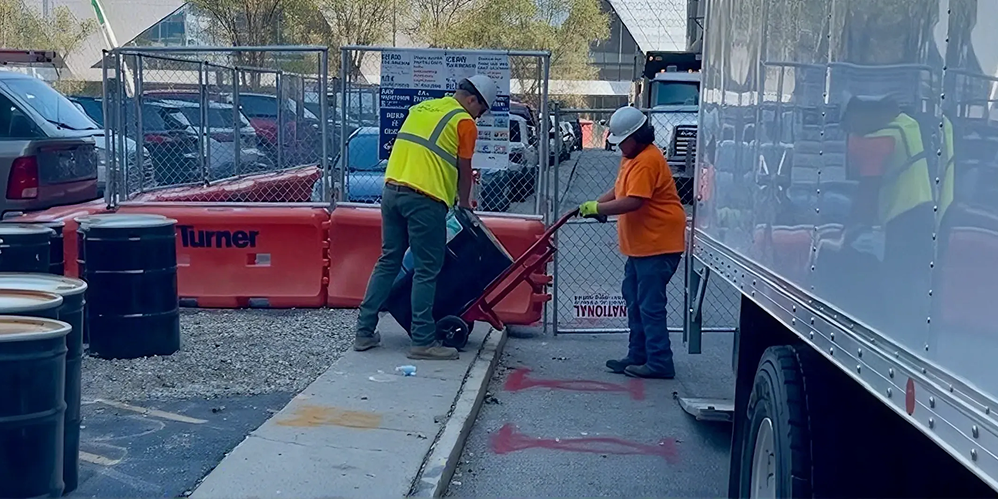
Emergency Spill Response: What Happens in the First 24 Hours Emergency Spill
Environmental Remediation Contractor (ERC) provides 24/7 emergency spill response services throughout Ohio, surrounding states, and nationally. When a spill happens — a diesel release, a transformer oil leak, a tanker rollover, or an industrial chemical incident — the first 24 hours determine how the rest of the project goes. A fast, correctly handled spill response keeps a cleanup contained and limits your expense exposure. A delayed or mishandled one turns into a much bigger project, with more contaminated soil, more regulatory exposure, and a much larger bill at the end. This guide walks you through what should happen, hour by hour, once a qualified response team is on site, along with the mistakes that most often turn a manageable spill into a costly one.
The First Priority Is Always Safety
Before any cleanup work begins, a response team secures the scene. That means eliminating ignition sources near flammable material, keeping people away from the release, and preventing product from reaching storm drains, streams, or other sensitive areas nearby. This holds true whether the release is a few gallons of diesel in a parking lot or a much larger industrial incident — containment always comes before cleanup, and cleanup always comes before site restoration.
Depending on the volume and type of material released, specific reporting requirements may apply. An experienced emergency spill response team is already thinking about regulatory notification while the containment work is underway, not scrambling to figure it out after the fact. That’s part of what separates a HAZWOPER-trained crew from a general contractor trying to handle an environmental incident outside their normal scope of work.
Site safety also extends to the responders themselves. Depending on the material involved, crews may need personal protective equipment ranging from basic gloves and eye protection up through full chemical-resistant suits and respiratory protection. Skipping this step to save time is one of the more common ways an incident gets worse rather than better — an injured responder adds an entirely new set of problems on top of the original spill.
What a Professional Response Team Assesses the Scene First
A qualified crew arrives with the equipment to contain and recover released product immediately — absorbent booms, vacuum trucks, and containment berms are standard first-hour tools. From there, the team assesses how far the material has traveled, what surfaces or soil it has contacted, and what must happen next: additional excavation, ongoing recovery, or extended monitoring.
This is also when the documentation process starts. Photos, daily field logs, and initial sampling all matter later — both for regulatory reporting and for any insurance claim tied to the incident. A response team that treats documentation as an afterthought creates problems for the property owner weeks down the road, when a regulator or insurer asks a question nobody can answer with confidence.
Equipment staging matters more than people expect. A crew that shows up with the wrong size vacuum truck, or without enough absorbent material for the actual volume released, loses valuable time making a second trip or waiting on additional resources. This is one of the reasons an initial phone assessment — getting a rough sense of material and volume before the truck rolls — makes a real difference in how quickly the team gets ahead of the release once they arrive.
Spill-Specific Response: Diesel, Transformer Oil & Tanker Accidents
Diesel fuel spills move fast and evaporate unevenly, so speed matters. Prompt containment and recovery typically reduce both cleanup cost and environmental impact compared to a delayed response. Once ignition sources are secured and the area is contained, crews work to recover as much product as possible before it soaks further into soil or reaches groundwater.
Transformer oil releases carry an extra wrinkle: if PCBs are present, additional regulatory requirements kick in. Cleanup typically involves containment, soil excavation, vacuum truck services, waste disposal, and sampling to confirm the extent of the release. ERC provides emergency response and remediation services for utility, industrial, and commercial facilities affected by transformer oil releases specifically because these incidents require both spill response and hazardous waste expertise at the same time.
Tanker truck accidents are their own category entirely. Responders have to assess site safety, stop the active release, and protect nearby waterways and infrastructure, often while emergency service crews are still managing traffic control and injuries at the scene. Cleanup typically includes product recovery, contaminated soil removal, waste transportation, environmental sampling, and site restoration. Regulatory agencies may require reporting and documentation throughout, and an experienced emergency response contractor coordinates all of it — restoring the site as quickly and safely as conditions allow.
How Fast Do You Need to Report a Spill?
Reporting timelines vary based on the material released, the quantity, the location, and the potential environmental impact. As a general rule: anything that threatens human health, public safety, waterways, or the environment needs to be addressed and reported immediately, not at the end of the business day or once the initial cleanup is finished.
An experienced environmental contractor can help determine exactly what notification is required and coordinate that communication with regulatory agencies directly. Timely, accurate reporting tends to reduce enforcement risk and keeps the cleanup itself moving faster, since regulators are far more responsive to a property owner who reports promptly and transparently than one who waits and hopes the issue resolves itself.
Common Mistakes That Turn a Small Spill Into a Big One
The most expensive spills ERC responds to are rarely the ones that started large — they’re the ones that started small and were mishandled early. Common mistakes include using the wrong absorbent material for the type of product released, attempting to hose down or dilute a spill (which typically spreads contamination rather than resolving it), and delaying the call to a qualified spill responder while trying to assess the situation internally first.
Another frequent issue is incomplete containment — stopping the visible surface spread without accounting for where the product may have already traveled underground or into a drainage system. A trained response team checks both, which is part of why a professional response, even for a seemingly minor spill, tends to cost less in total than a well-intentioned but incomplete internal effort followed by a professional cleanup after the fact.
What Happens After the First 24 Hours
Once the immediate release is contained and recovered, the project shifts into assessment and closeout. This typically includes confirming the full extent of any soil or groundwater impact through sampling, coordinating disposal of contaminated material and recovered product, and completing whatever regulatory documentation the incident requires. For smaller, well-contained spills, this phase can wrap up within days. For incidents involving confirmed soil or groundwater contamination, it may extend into a longer remediation project.
ERC stays engaged through this entire process — from the first hour of containment through final site restoration and closeout documentation — rather than handing off to a different team once the emergency phase ends. That continuity matters, since the crew that responded to the incident already understands the site conditions and what was found during the initial response.
What you should Have Ready Before You Call a spill responder
When you call ERC’s emergency line, having a few basic facts ready speeds up mobilization: what material was released and roughly how much, where on the property it happened, whether it’s still actively leaking, and whether it’s near a storm drain, waterway, or other sensitive area. None of this needs to be precise — our crews are trained to assess conditions on arrival — but a clear initial picture helps dispatch send the right equipment and the right number of people the first time.
Why HAZWOPER Training Matters in Those First Hours
Emergency spill response is not general construction work. ERC’s field teams complete 40-hour HAZWOPER training, plus an annual 8-hour refresher, specifically because the first hours of a spill response involve hazards — chemical exposure, confined spaces, unstable ground — that untrained crews aren’t equipped to manage safely. That training is also what allows our teams to move quickly and confidently once they’re on site, rather than pausing to figure out basic safety protocols in the middle of an active incident.
Frequently Asked Questions
Environmental Remediation Contractor (ERC) provides 24/7 emergency spill response services, responding to petroleum spills, diesel fuel releases, chemical incidents, utility emergencies, tanker truck accidents, and industrial environmental events. Services include containment, cleanup, hazardous waste management, remediation, restoration, and regulatory support.
The first priority is safety: Call 911 if you need to first. Eliminate ignition sources, secure the area, and prevent fuel from reaching storm drains, streams, or sensitive environments. Depending on the volume released, reporting requirements may apply. Professional spill responders can quickly contain and recover released fuel, manage contaminated materials, and help coordinate regulatory notifications.
Environmental contractors with spill response and remediation expertise typically manage transformer oil spills, which may involve containment, soil excavation, vacuum truck services, waste disposal, sampling, and environmental restoration. If PCB contamination is present, additional regulatory requirements may apply.
Responders assess site safety, stop the release, contain spilled materials, and protect nearby waterways and infrastructure. Cleanup often includes product recovery, contaminated soil removal, waste transportation, environmental sampling, and restoration, with regulatory agencies frequently requiring documentation throughout.
Reporting requirements vary based on the material released, quantity, location, and potential environmental impact. Spills that threaten human health, public safety, waterways, or the environment should be addressed and reported immediately. For environmental spills, the working rule should be: report immediately once you know the spill meets—or may meet—a reporting threshold. Do not wait until cleanup is underway or the exact quantity is known.
For Ohio, the requirement is particularly clear. A reportable release must be verbally reported within 30 minutes after someone at the facility becomes aware of it, unless reporting within that time is impracticable. Ohio’s current rule, effective April 1, 2026, requires notification to the Ohio EPA Environmental Response Unit and, depending on the incident, the local emergency planning committee, fire department, or 911.
Environmental contractors can help determine notification requirements and coordinate communication with regulatory agencies.
Ohio EPA Emergency Response: 800-282-9378
National Response Center: 800-424-8802
Generally, no. Common DIY mistakes — using the wrong absorbent material, hosing down a spill, or delaying the call while assessing internally — often spread contamination further and end up costing more to fix than an immediate professional response would have.
