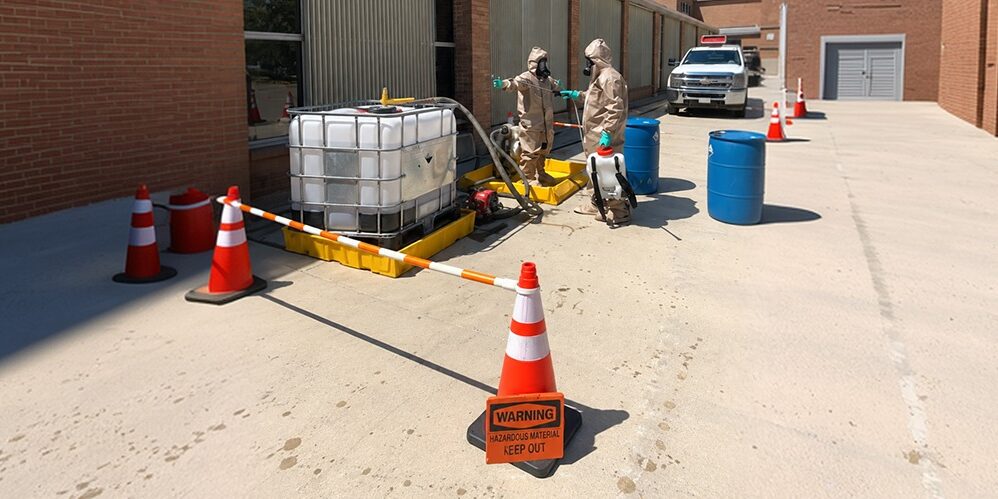
“HAZMAT” is short for hazardous materials: substances that can harm people, property or the environment if they are released, mishandled or transported the wrong way. Fuel, paint, cleaning chemicals, batteries, compressed gas cylinders and industrial waste all fall under the term. At Environmental Remediation Contractor (ERC), our crews handle these materials every week, from drum pickups at manufacturing plants to emergency spill cleanups on highways. This guide explains what HAZMAT means, how the nine hazard classes work, and what safe handling and transportation look like in practice.
What Does HAZMAT Mean?
In the United States, the formal definition comes from the U.S. Department of Transportation (DOT). Its Hazardous Materials Regulations (49 CFR Parts 171–180) define a hazardous material as any substance the DOT has decided poses an unreasonable risk to health, safety or property when it is transported. The Occupational Safety and Health Administration (OSHA) and the Environmental Protection Agency (EPA) use their own related terms, “hazardous chemicals” in the workplace and “hazardous waste” once a material is discarded, but in everyday use most people mean the same thing: something that needs special care because it can burn, explode, poison, corrode or contaminate.
That last word matters for property owners. A material does not have to be dramatic to be hazardous. Used motor oil, a leaking transformer or a forgotten drum of solvent behind a warehouse can all create an environmental liability if they reach soil, groundwater or a storm drain.
How Many Hazard Classes Are There?
There are nine hazard classes. The DOT groups every hazardous material into one of them based on its main danger, and several classes are split into divisions. The class decides how a material must be packaged, labeled, placarded and transported.
| Class | Name | Common Hazmat Examples |
| 1 | Explosives (Divisions 1.1–1.6) | Fireworks, ammunition, blasting caps, detonating cord |
| 2 | Gases (2.1 flammable, 2.2 non-flammable, 2.3 toxic) | Propane, acetylene, compressed nitrogen, chlorine, ammonia |
| 3 | Flammable liquids | Gasoline, diesel, acetone, many paints and solvents |
| 4 | Flammable solids (4.1, 4.2 spontaneously combustible, 4.3 dangerous when wet) | Matches, oily rags, sodium metal, calcium carbide |
| 5 | Oxidizers and organic peroxides (5.1, 5.2) | Pool chlorine, ammonium nitrate, hydrogen peroxide |
| 6 | Toxic and infectious substances (6.1, 6.2) | Pesticides, cyanide compounds, medical and biological waste |
| 7 | Radioactive materials | Medical isotopes, industrial gauges, some lab sources |
| 8 | Corrosives | Sulfuric acid, battery acid, sodium hydroxide (lye) |
| 9 | Miscellaneous dangerous goods | Lithium batteries, dry ice, PCB-containing materials, asbestos |
A few of these examples surprise people. Lithium-ion batteries are Class 9 and are behind a growing number of fires and cleanups, which we cover in our guide to lithium-ion battery fires and EV battery waste. PCBs from older electrical equipment are also Class 9 when shipped, even though they are among the most tightly regulated contaminants in the country.
How to Handle Hazardous Materials Safely
Safe hazardous material handling follows the same basic order whether you run a plant, a fleet yard or a municipal facility:
- Know what you have. Keep a current Safety Data Sheet (SDS) for every chemical on site and make sure containers are labeled under OSHA’s Hazard Communication Standard.
- Store it correctly. Separate incompatible materials (acids away from bases, oxidizers away from fuels), keep containers closed, and use secondary containment for liquids.
- Use the right protection. Gloves, eye protection, chemical-resistant suits and respirators are chosen based on the SDS, not on what happens to be in the truck.
- Train the people who touch it. Workers who clean up releases or work on contaminated sites need HAZWOPER training. Every ERC field crew member completes the 40-hour HAZWOPER course plus an annual 8-hour refresher.
- Plan for the bad day. Have spill kits, a written response plan and a contractor you can call 24/7 before something leaks.
Handling hazardous materials also means knowing when to stop. If a container is bulging, leaking, unlabeled or simply unknown, the safest move is to isolate the area and call a professional rather than open or move it.
HAZMAT Transportation: What the Rules Require
Transporting hazardous materials is one of the most regulated activities in the country. Any company involved in hazmat hauling or shipping hazmat loads has to get several things right:
- Classification and packaging that matches the material’s hazard class and packing group.
- Marking, labels and placards on packages and hazmat vehicles so first responders know what they are dealing with.
- Shipping papers that describe the material, quantity and an emergency response phone number.
- Trained drivers and handlers. DOT requires hazmat employee training at least every three years, and drivers of placarded loads need a commercial driver’s license with a hazmat endorsement.
- Waste manifests for hazardous waste. When the material is waste rather than product, EPA rules add an EPA identification number and a uniform hazardous waste manifest that tracks the load from the site to a permitted disposal facility.
For property owners, the practical point is this: the company that generates hazardous waste stays responsible for it even after it leaves the property. That is why choosing qualified hazardous material carriers and disposal facilities matters, and why every load ERC removes is matched to a waste profile before it ships.
When Hazardous Materials Become an Environmental Problem
Most of ERC’s hazmat work starts in one of three ways:
- A release. A tanker rollover, a ruptured line or a leaking tote. Our emergency response team contains the material, recovers product with vacuum trucks and handles the cleanup and reporting. Our guide to the first 24 hours of a spill walks through what happens step by step.
- Accumulated waste. Drums, totes and containers left over from operations, a closed process line or a property sale. ERC’s drum pickup and waste disposal service sorts, profiles, packages and removes them.
- Historical contamination. Hazardous materials that leaked into soil or groundwater years ago and are found during a property transaction or construction. That becomes a soil remediation or groundwater remediation
Do You Need a Hazardous Materials Contractor?
You probably do if you have unknown or unlabeled containers, a release that has reached soil, water or a drain, waste that must be profiled and shipped, or a site being closed, sold or redeveloped. Look for a contractor with HAZWOPER-trained crews, its own response equipment and experience with your state’s regulators. Our contractor selection checklist covers the questions worth asking.
ERC is an environmental remediation contractor headquartered in Columbus, Ohio, serving clients nationwide across the U.S. Our teams respond to hazardous material incidents 24 hours a day.
Have a hazardous material release, unknown containers or waste that needs to go? Call ERC’s 24/7 emergency line at 8776837724, or request an estimate for planned drum pickup and disposal.
Frequently Asked Questions
HAZMAT means hazardous materials: substances that can harm people, property or the environment if released or mishandled. The U.S. Department of Transportation defines them as materials that pose an unreasonable risk to health, safety or property during transportation.
There are nine DOT hazard classes: explosives, gases, flammable liquids, flammable solids, oxidizers and organic peroxides, toxic and infectious substances, radioactive materials, corrosives, and miscellaneous dangerous goods.
Everyday examples include gasoline and diesel (Class 3), propane (Class 2), battery acid (Class 8), pool chlorine (Class 5), pesticides (Class 6) and lithium-ion batteries (Class 9).
Keep a Safety Data Sheet for each material, label and store containers correctly, separate incompatible chemicals, use secondary containment for liquids, wear the right protective equipment and make sure workers are trained. Unknown or leaking containers should be left to trained professionals.
Only carriers that meet DOT Hazardous Materials Regulations. That includes correct packaging, placards, shipping papers, trained employees and, for placarded loads, drivers with a hazmat endorsement. Hazardous waste also needs an EPA ID number and a hazardous waste manifest.
Environmental contractors with HAZWOPER-trained crews and spill response equipment handle hazmat cleanups. Environmental Remediation Contractor (ERC) provides 24/7 emergency response for clients nationwide.
