

How Much Does Underground Storage Tank Removal Cost? A Practical Guide
It’s one of the first questions every property owner asks, and it’s also one of the hardest to answer with a single number: what does it actually cost to remove an underground storage tank (UST)? The honest answer is that it depends on several project-specific factors — but understanding exactly what those factors are will help you budget realistically, compare quotes properly, and spot a lowball estimate before it becomes a problem mid-project. This guide breaks down what actually drives UST removal costs, what the process typically involves, how long it takes, and what to do if your tank is already leaking.
What Actually Drives the Cost
UST removal costs depend on tank size, location, and accessibility; permitting requirements; the tank’s construction material; whether contamination is found; disposal costs; and site restoration needs. Small, easily accessible tank removals with no contamination might cost a few thousand dollars. Larger projects, or ones where contaminated soil turns up once the tank is out of the ground, can be substantially higher.
This is exactly why a fixed, guaranteed “total clean-up” price should raise a flag before you sign a contract. The full extent of contamination at a site is rarely known before excavation begins. A responsible storage tank removal contractor will give you a detailed scope and an itemized fee schedule, including how extra work — like additional soil or liquid removal — gets billed if it comes up during the project.
What's Actually Included in a Typical Removal Scope
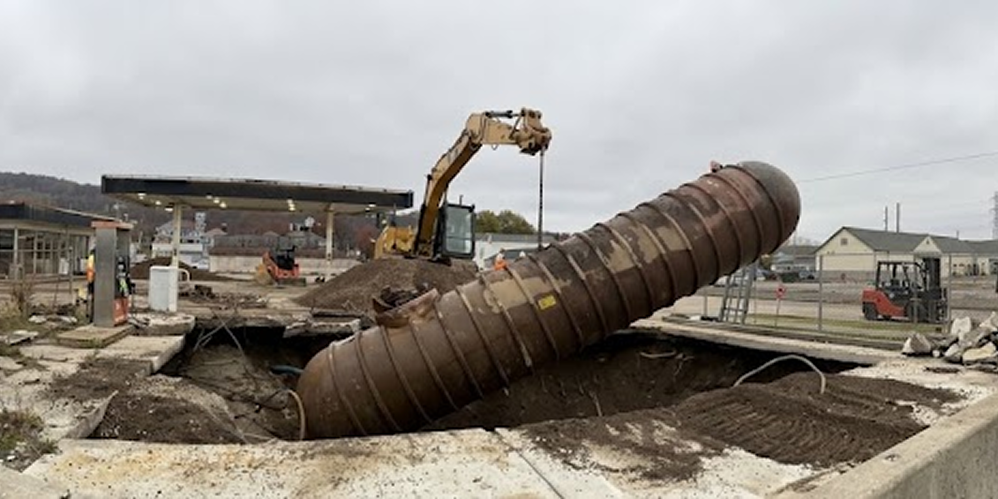
A standard UST removal project includes permitting and utility clearance before any excavation starts; the physical excavation and extraction of the tank; tank cleaning and proper disposal or recycling; soil sampling around the tank pit; backfill and site restoration; and final documentation and closure reporting. Each of these steps has its own cost component, which is why an itemized quote gives you a much clearer picture than a single lump-sum number.
Utility clearance is a step property owners sometimes don’t anticipate. Before any excavation equipment touches the ground, underground utility lines — gas, water, electrical, communications — need to be located and marked. On older commercial properties, this step alone can occasionally turn up surprises that affect both cost and schedule.
Aboveground vs. Underground: Different Cost Drivers
Aboveground storage tanks (ASTs) and underground storage tanks (USTs) both require licensed removal, but the cost drivers differ. AST removal is typically more accessible — there’s no excavation required to reach the tank itself — but may involve more extensive cleaning and residue disposal depending on what was stored. UST removal almost always involves excavation, utility clearance, and soil sampling around the tank pit, which adds cost even on a straightforward, uncontaminated site.
How Long Does the Process Take?
Most underground storage tank removals are completed within several days. Permitting, utility clearance, contamination assessment, and site restoration can extend that timeline, and complex projects involving multiple tanks or confirmed environmental impact often need meaningfully more time. A qualified, licensed UST contractor should be able to give you a realistic project schedule based on your specific site conditions — not a generic estimate pulled from a brochure.
What If the Tank Is Already Leaking?
Generally, a leaking tank should not remain in service until the cause of the release has been investigated and addressed. Continued operation increases contamination, liability, and regulatory exposure. An environmental professional can evaluate the release, determine what corrective action is needed, and help you navigate compliance requirements from there — which is a very different, usually more urgent, scope than a routine, planned removal.
A leaking tank almost always means the closure process expands to include the BUSTR corrective action requirements specific to confirmed releases, which changes both the cost and the timeline substantially compared to a clean, planned removal. Corrective action costs are the single biggest variable in UST project budgets — a property owner planning for a routine removal who discovers a confirmed release mid-project should expect the scope, and the number, to shift meaningfully.
How do we remove Underground Storage tanks across the country?
I developed a National Matrix to use as a guide for everyone to use. See my Excel Chart Answer on regulated petroleum UST permanent closure/removal nationally. How do we include that?
Real Project: Bexley, Ohio
ERC was hired by the City of Bexley as the Environmental General Contractor to remediate soil and groundwater contamination at a former Sunoco gas station after historic UST releases. That project involved tank removal, contamination assessment, and coordinated cleanup work over several phases — see the full Bexley UST removal case study for what a contaminated-site UST project actually looks like from removal through closure.
Getting an Estimate You Can Actually Trust
The only way to get an accurate cost is a site-specific assessment from an experienced environmental consultant or contractor — one who is transparent about what’s known, what isn’t, and how the unknowns will be billed if they turn into real work. Ask specifically how the contractor handles surprises: what happens if soil sampling comes back contaminated after the tank is already out of the ground? A contractor who can answer that question clearly, before the project starts, is usually a good sign.
It’s also worth asking whether the quote includes final closure documentation, or whether that’s billed separately. Some lower quotes look attractive because they cover only physical removal and leave regulatory closeout as an add-on — which means the “cheaper” bid may not actually be cheaper once you compare full, apples-to-apples scopes.
Why Self-Performing Contractors Often Cost Less in Practice
A contractor that self-performs excavation, tank removal, and waste transportation — rather than subcontracting each piece — typically has more direct control over cost and schedule. Every subcontractor handoff adds markup and coordination time. ERC handles removal, hauling, and disposal coordination directly on most UST projects, which keeps the process moving without waiting on a chain of separate vendors.
Financing and Reimbursement Options Worth Asking About
Depending on your state and situation, financial assistance may be available to offset UST removal and corrective action costs — state UST trust funds, petroleum release reimbursement programs, and in some cases brownfield grant programs can apply, particularly when contamination is confirmed. Eligibility rules and available funding change over time, so this is worth a direct conversation with your contractor or an environmental consultant early in the process, rather than assuming no assistance exists.
Property owners are sometimes unaware these programs exist until well into a project, at which point some documentation requirements — like specific sampling protocols — may need to be met retroactively or not at all. Raising the question before work begins gives you the best chance of qualifying if a program applies to your situation.
What Happens to the Tank Once It's Removed
Once extracted, a storage tank typically goes through cleaning to remove residual product, followed by recycling as scrap metal in most cases — tanks are rarely simply landfilled. Any residual sludge or liquid removed during cleaning is characterized and disposed of as its own waste stream, separate from the tank itself and separate from any contaminated soil found in the excavation. Keeping these waste streams properly separated and documented is part of what an experienced contractor manages as standard practice.
Frequently Asked Questions
UST removal costs depend on tank size, location, accessibility, permitting requirements, tank construction material, contamination findings, disposal costs, and site restoration needs. Small tank removals may cost a few thousand dollars, while larger projects involving contamination can be substantially higher. The most accurate estimate requires a site-specific assessment.
Most underground storage tank removals can be completed within several days, although permitting, utility clearance, contamination assessment, and restoration activities may extend the schedule. Complex projects involving multiple tanks or environmental impacts often require additional time.
Generally, leaking tanks should not remain in service until the cause of the release is investigated and addressed. Continued operation may increase contamination, liability, and regulatory consequences.
Qualified environmental contractors with tank closure experience, licensed for underground storage tank removals, perform fuel tank removals. ERC provides underground and aboveground storage tank removal services throughout Ohio and the Midwest.
Aboveground storage tanks avoid excavation costs but may involve more extensive interior cleaning and residue disposal. Underground tanks typically require excavation, utility clearance, and soil sampling around the tank pit. The cheaper option depends on the specific tank, site, and contents involved.
Depending on the state and situation, state UST trust funds, petroleum release reimbursement programs, or brownfield grants may help offset removal and corrective action costs, particularly when contamination is confirmed. Eligibility and available funding vary, so it’s worth discussing options with your contractor early in the process.
