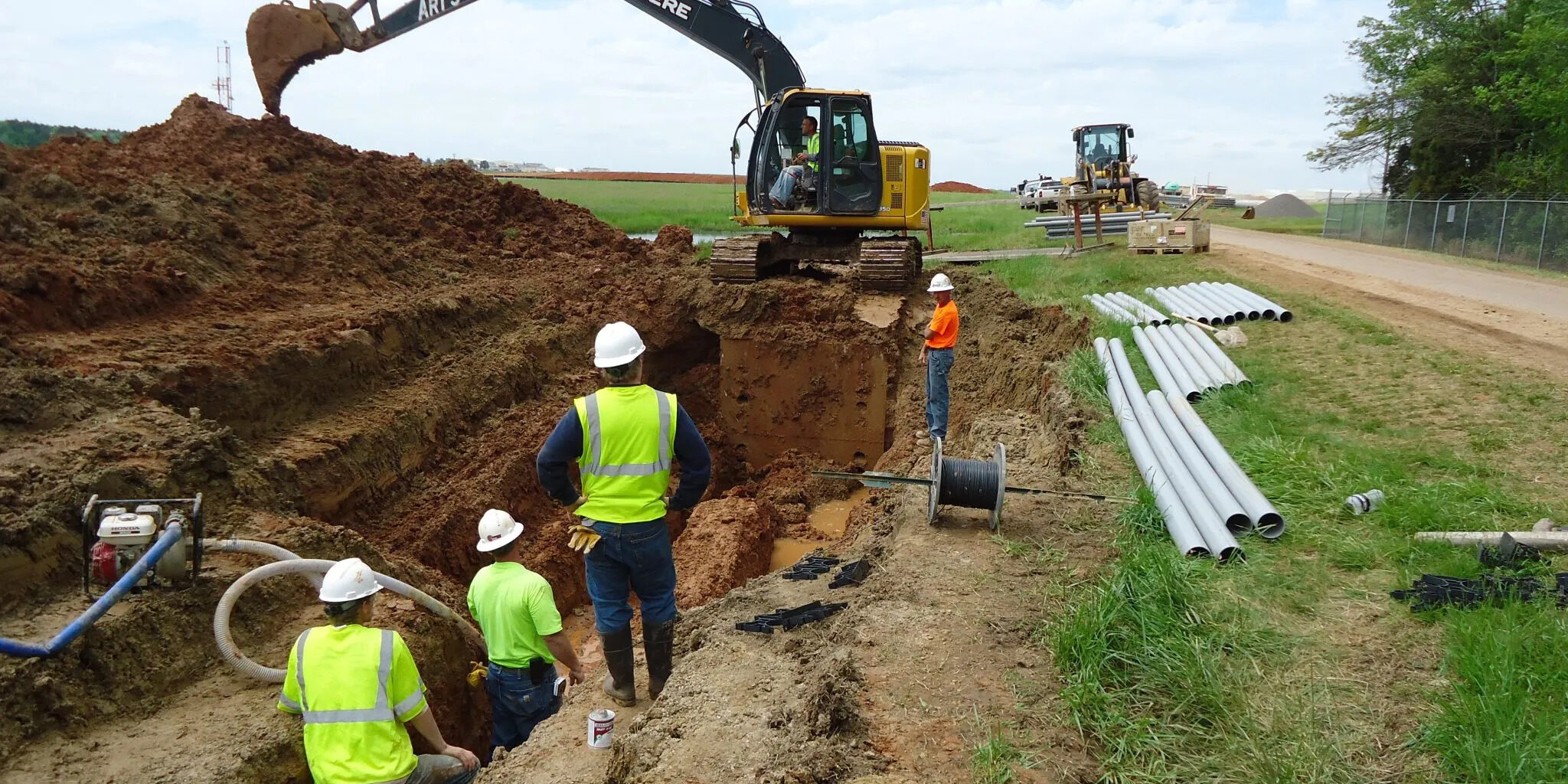
Shoring is a temporary support system that holds back the walls of a trench or excavation so they cannot collapse on workers. It uses vertical and horizontal members, such as hydraulic struts, timber or steel sheets, to apply pressure against the soil. Shoring is one of three ways OSHA allows contractors to protect workers in an excavation, alongside sloping (or benching) and shielding with trench boxes.
Excavation is central to environmental work. Removing contaminated soil, pulling underground storage tanks and installing remediation systems all mean digging, often near buildings, roads and utilities. This guide explains how shoring works and what the rules require.
Why Excavation Protection Matters
Trench collapses happen fast and with little warning. A single cubic yard of soil can weigh as much as a small car, which is why cave-ins are among the most dangerous hazards in construction. OSHA’s excavation standard (29 CFR 1926 Subpart P) exists to prevent them.
When Does OSHA Require a Protective System?
- 5 feet or deeper: a protective system (sloping, shoring or shielding) is required, unless the excavation is entirely in stable rock.
- Under 5 feet: a competent person must still examine the excavation and decide whether protection is needed.
- 20 feet or deeper: the protective system must be designed or approved by a registered professional engineer.
- 4 feet or deeper: a safe way out, such as a ladder or ramp, must be within 25 feet of lateral travel for workers in a trench.
- Spoil and equipment: excavated soil and materials must be kept at least 2 feet back from the edge.
A competent person must inspect excavations daily, before each shift and after rain or any event that could change conditions.
Shoring vs Sloping vs Shielding
| Method | How it protects workers | Best for |
| Sloping and benching | Cuts the trench walls back at a safe angle or in steps | Open sites with room to dig wide |
| Shoring | Braces the trench walls to stop soil from moving | Tight sites near buildings, roads and utilities |
| Shielding (trench boxes) | A steel or aluminum box protects workers if the walls fail; it does not stop soil movement | Linear trenches, such as utility lines |
The key difference: shoring prevents a collapse by supporting the soil, while shielding protects workers inside a box if a collapse happens.
Common Types of Shoring
- Hydraulic shoring: aluminum or steel struts with hydraulic cylinders press against the trench walls. Light, quick to install from the surface, and common for trenches.
- Timber shoring: wood uprights, wales and cross braces. Still used, but slower to install than hydraulic systems.
- Sheet piling: interlocking steel sheets driven into the ground before digging. Used for deep excavations and where groundwater is present.
- Soldier piles and lagging: steel beams driven at intervals with timber or concrete panels between them. Used for large open excavations next to structures.
- Pneumatic shoring: similar to hydraulic shoring but uses air pressure.
How Soil Type Affects Shoring
OSHA classifies soil as stable rock or Type A, B or C. Type A soils, such as stiff clay, are the most stable. Type C soils, such as loose sand, gravel and submerged soil, are the least stable. The less stable the soil, the flatter the required slope or the stronger the shoring. Soil that has been dug before, is wet, or is subject to vibration from traffic or equipment is treated as less stable.
Shoring on Environmental and Remediation Projects
Contaminated sites add extra challenges. Crews may be digging out petroleum-impacted soil around a former tank, chasing contamination close to a foundation, or working below the water table. That often means shoring is combined with:
- Dewatering and treatment of contaminated groundwater
- Air monitoring for vapors and confined-space hazards
- Workers trained under HAZWOPER for contaminated sites
- Careful handling and profiling of excavated soil for disposal, explained in our guide to waste profiles for contaminated soil
Tank pulls are a common example. Our UST and AST removal work and our guide to UST removal costs explain how excavation fits into a tank closure.
How ERC Approaches Excavation Safety
Environmental Remediation Contractor (ERC), headquartered in Columbus, Ohio, self-performs excavation, tank removal and soil remediation for clients nationwide across the U.S. Every project starts with a site-specific health and safety plan, a competent person on site, and the right protective system for the soil, depth and setting. You can read more about our approach on our Safety First page.
Planning a tank removal or contaminated soil excavation? Request an estimate from ERC, or call 614-769-6535 to talk through your site.
Frequently Asked Questions
Shoring is a temporary support system, such as hydraulic struts, timber or steel sheets, that holds back trench and excavation walls so they cannot collapse.
OSHA requires a protective system for excavations 5 feet or deeper unless they are entirely in stable rock. Systems for excavations 20 feet or deeper must be designed by a registered professional engineer.
Shoring supports the soil to prevent a collapse. A trench box, or shield, does not stop the soil from moving; it protects workers inside it if a collapse happens.
Common types are hydraulic shoring, timber shoring, sheet piling, soldier piles and lagging, and pneumatic shoring.
A competent person chooses and inspects the protective system based on soil type, depth and site conditions. Deeper excavations need a registered professional engineer.
Often, yes. Tank excavations are frequently deeper than 5 feet and close to buildings or roads, so they need sloping, shoring or shielding.
