When you call a 24/7 industrial spill response line, a dispatcher should answer right away. They will ask what spilled, how much, where and whether anyone is hurt. Within minutes they mobilize a crew and give you an estimated arrival time and the name of a field supervisor. When the crew arrives, it checks safety, contains the release, then recovers and cleans up the material and manages the waste. You get regular updates throughout, and a closeout package at the end. Environmental Remediation Contractor (ERC) answers its emergency line, 877.683.7724, around the clock. Here is exactly what to expect, and how to prepare so the call goes faster.
Before You Call: Make the Scene Safe
If there is a fire, injuries, a strong odor or a release that threatens the public, call 911 first. Then, if it is safe, take the steps that prevent most of the damage: stop the source, protect drains and keep people away. A spill contractor is not a substitute for emergency services. It works alongside them.
The Call: What the Dispatcher Will Ask
Having these answers ready speeds up dispatch and makes sure the right crew and equipment arrive the first time:
- Material: product name and, if possible, the safety data sheet
- Estimated volume: gallons spilled and whether the leak is still going
- Exact location: address, building or dock number, GPS point for remote sites, and the best entry gate
- Where it is going: pavement, soil, floor drains, storm sewers, a ditch or water
- Hazards on site: fire, vapors, injuries, traffic, confined spaces
- Who is in charge: on-site contact name and cell number, and whether fire or police are in command
Billing: whether you have a pre-arranged emergency spill response agreement
What Happens Next, Step by Step
| Stage | What the response team does | What you should get |
| Dispatch | Assigns a crew, loads equipment for the material and volume, heads out | ETA and the field supervisor’s name and number |
| Arrival and assessment | Checks in with incident command, assesses hazards, confirms the material, sets work zones | An initial scope and plan |
| Containment | Stops spread with booms, berms, drain covers, and leak control where safe | Confirmation that the release is contained |
| Recovery and cleanup | Vacuums product, decontaminates surfaces, cleans drains and sumps, excavates soil | Progress updates and an early cost picture |
| Waste handling | Segregates, containerizes and samples waste, then profiles and ships it | Waste plan, manifests and disposal records |
| Closeout | Restores the area and confirms results with sampling if needed | Final report, photos and itemized invoice |
Larger incidents, such as product reaching soil or water, may roll into an investigation and remediation phase after the emergency is over. Our article on what happens in the first 24 hours of an emergency spill covers the first day in more detail.
The Equipment You Should See
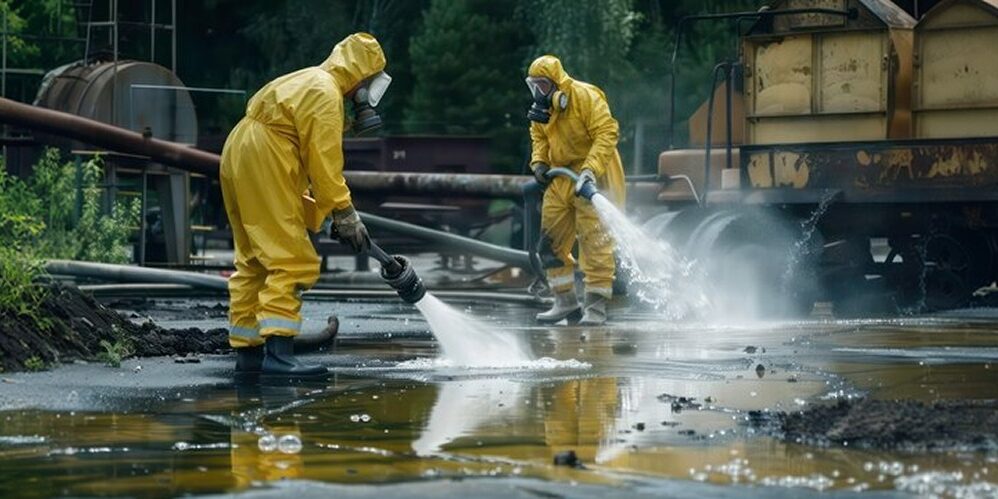
A capable industrial spill crew arrives with more than absorbent pads. Depending on the job, expect:
- Vacuum trucks and vacuum trailers for fast recovery of liquids and sludge
- Containment and sorbent boom, drain covers, pigs and berm materials
- Air monitoring equipment for vapors and oxygen levels
- Pumps, hoses and transfer tanks or totes
- Pressure washers and decontamination equipment
- Excavation equipment and roll-off containers for impacted soil
- Personal protective equipment matched to the material
Ask during setup whether the contractor owns this equipment or rents and subcontracts it. Self-performing contractors can usually move faster and keep tighter control of the job. ERC self-performs our emergency work.
Communication and Cost Updates
You shouldn’t be left guessing. Expect the field supervisor to brief you at arrival, after containment and at regular intervals, and to flag changes in scope before they drive up cost. On larger jobs, ask for a daily summary covering crew, equipment, waste generated and costs to date. That record also supports any regulatory reports you need to file, such as a call to the National Response Center (800-424-8802) or your state hotline. In Ohio, that’s the Ohio EPA spill hotline at 800-282-9378.
The receiving facility returns a signed copy of the manifest, and often a certificate of disposal or destruction. The generator should keep hazardous waste manifests for at least three years. Many companies keep them much longer, because generator liability doesn’t expire.
How to Make the Next Call Faster
- Set up a spill response agreement so your account, contacts and rates are already on file
- Post the 24/7 number by phones, in vehicles and in your SPCC or contingency plan
- Keep SDS sheets and a site map with drain locations easy to reach
- Train staff on first steps, and make sure designated responders have HAZWOPER training
- Restock spill kits after every use
ERC responds to industrial, commercial and transportation spills for clients nationwide, from our headquarters in Columbus, Ohio. See our emergency response services to learn more.
Frequently Asked Questions
The material spilled, the estimated volume, the exact location, where the spill is flowing, any hazards or injuries, the on-site contact and billing details. If you don’t know everything, call anyway. The dispatcher will work through it with you.
Call 911 first if there is a fire, injury, strong vapors or a threat to the public. Then call your spill contractor. For a contained spill with no immediate danger, call the contractor and make any required regulatory notifications.
Many charge after-hours or emergency rates. Agreeing on rates in advance through a spill response agreement removes surprises and avoids negotiating in the middle of an incident.
Small, contained spills can be finished in hours. Larger releases involving soil excavation, drain cleaning or waste profiling can take several days. Waste disposal paperwork can continue after the site work is done.
Keep people away, stay upwind, remove ignition sources if it is safe, and protect drains with covers or absorbents. Don’t hose the spill toward a drain, and don’t try to handle unknown materials.
Reporting is usually the responsible party’s obligation, and some reports must be made within minutes. Make required notifications yourself. Your contractor will provide the volumes, timelines, photos and waste records you need for follow-up reports.
