

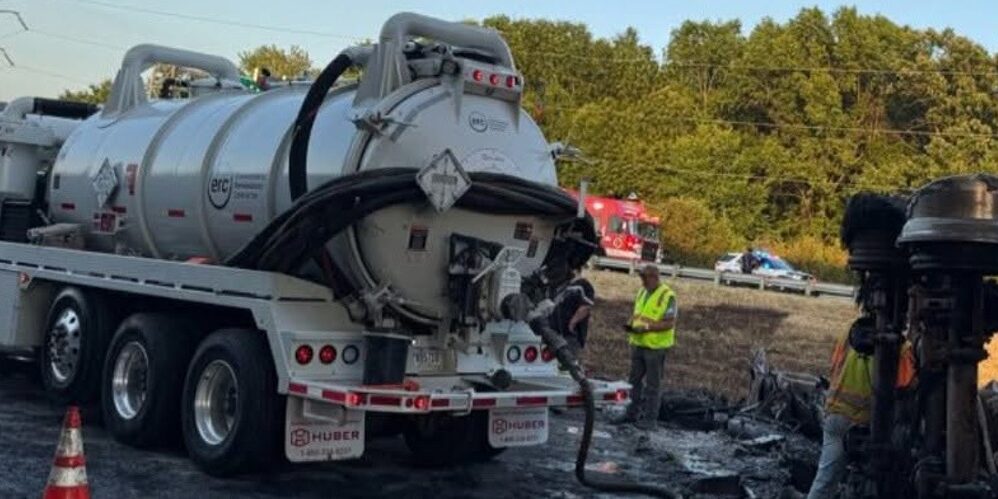
When a truck, tanker or railcar releases fuel or hazardous materials, the carrier is responsible for the cleanup, and the clock starts right away. A reliable transportation spill response contractor gets trained crews and equipment to the scene fast. It contains the release before it reaches drains, ditches or waterways, cleans up the road and the soil beside it, and manages the waste. It also documents everything the carrier needs for DOT, state and insurance reporting. At Environmental Remediation Contractor (ERC), our 24/7 emergency teams respond to roadway, rail-yard and terminal spills for carriers nationwide. This guide explains what you should expect from a contractor, and how to tell a dependable one from a phone number on a list.
Why Transportation Spills Are Different
A release at a plant usually happens on a paved, controlled site with a spill plan and staff who know the layout. A transportation spill happens wherever the vehicle is. That could be a highway shoulder in the rain, an exit ramp next to a storm drain, a rail siding beside a creek or a customer’s loading dock. The crew arriving at the scene has to work around live traffic, police and fire command, and road-closure pressure. They often have no prior knowledge of the site.
The most common transportation releases we see are:
- Saddle tank punctures: A ruptured diesel fuel tank after a collision or road debris strike, usually 50 to 150 gallons onto pavement and the shoulder.
- Tanker and cargo-tank rollovers: Larger-volume releases of fuel, chemicals or liquid product, often with soil and surface-water impact.
- Shifted or damaged packaged freight: Leaking drums, totes (IBCs) or pails of hazardous materials inside a trailer.
- Rail-yard and transload releases: Leaks during loading, unloading or car switching.
- Hydraulic and motor-oil leaks: Smaller volumes, but still a problem when they reach a drain or a waterway.
What a Reliable Transportation Spill Contractor Provides
1. Rapid, 24/7 Mobilization
Spills don’t follow business hours, and neither should your contractor. Look for a live 24/7 dispatch line answered by people who can deploy crews. A voicemail or an answering service that takes a message is not enough. Ask where the crews and equipment are based and which corridors they cover. A contractor several hours away can’t control a release on your behalf.
2. Containment First
The first priority is keeping the release from spreading. Crews block storm drains, set absorbent boom along ditches and curbs, build berms with sand or absorbent, and plug or transfer product from a leaking tank where it is safe to do so. Good containment in the first hour often decides whether a job stays a road cleanup or turns into soil excavation and a water-impact investigation.
3. Cleanup With the Right Equipment
Free product on the road is recovered with absorbents and vacuum trucks. Pavement is scrubbed or washed and the rinse water collected. Fuel-soaked soil on the shoulder or in the median is excavated and replaced. A contractor who owns its own vacuum trucks, roll-offs and excavation equipment can work through the job without waiting on subcontractors, which is one of the questions state agencies such as Indiana’s IDEM tell responsible parties to ask.
4. Waste Characterization, Transport and Disposal
Every spill produces waste: used absorbents, contaminated soil, recovered liquids and wash water. That waste has to be characterized, profiled with an approved disposal facility, manifested and hauled by a licensed transporter. ERC manages that chain from the scene to the final facility. For more on that process, see what a waste profile is and why it matters.
5. Documentation for Reporting and Insurance
Carriers have to report certain incidents. Under federal hazmat rules, serious incidents must be called in to the National Response Center (800-424-8802) as soon as practical and no later than 12 hours after the incident (49 CFR 171.15). A written DOT Form 5800.1 is generally due within 30 days for unintentional hazmat releases (49 CFR 171.16). States have their own rules. Ohio, for example, generally requires notice within 30 minutes of discovering a reportable release. A reliable contractor doesn’t file your reports for you, but it gives you what you need to file them: estimated volumes, product information, photos, timelines, waste manifests and disposal records. It also gives your insurer a clean, itemized record of the work.
6. Trained, Credentialed Crews
Every ERC crew member holds 40-hour HAZWOPER training with an annual 8-hour refresher. That matters at a roadway incident, where crews are working near traffic, flammable vapors and unknown materials. Ask any contractor for its safety program and training records, and look at its safety approach.
Transportation Spill Response at a Glance
| Phase | What the contractor does | What you receive |
| Dispatch (first minutes) | Takes incident details, confirms the material and location, mobilizes crew | ETA and a named field supervisor |
| Containment | Blocks drains, booms ditches, stops the leak where safe | Photos and a containment summary |
| Recovery and cleanup | Vacuums product, cleans pavement, excavates impacted soil | Daily progress updates |
| Waste management | Profiles, manifests and transports waste | Manifests and disposal certificates |
| Closeout | Restores the area, confirms cleanup with sampling if required | Final report for regulators and insurers |
Set Up Response Before You Need It
Fleets that run regular routes get faster, cheaper responses when terms are agreed in advance. A pre-arranged emergency spill response agreement puts your company, contacts and billing in the contractor’s system, so dispatch can start the moment your driver or safety manager calls. There is no credit check or contract negotiation while fuel runs toward a ditch. It also gives your drivers one number to call. Build that number into your driver incident cards and your hazmat emergency response information.
ERC supports carriers, logistics companies and infrastructure owners through our transportation and infrastructure services. We respond to transportation spills nationwide. To see how the first day of a cleanup typically unfolds, read what happens in the first 24 hours of an emergency spill.
Need a contractor on call along your routes? Set up an ERC emergency spill response agreement, or call our 24/7 emergency line at 8776837724 if you have a release right now.
Frequently Asked Questions
The carrier, or the party responsible for the material, is generally responsible for cleanup and its costs. Fire departments and highway crews may handle immediate life-safety and traffic control, but they expect the responsible party to bring in a qualified cleanup contractor.
As fast as possible, and a reliable contractor will give you a realistic ETA and a named supervisor when you call. Arrival time depends on distance, weather and traffic, so it pays to choose a contractor with crews based along your routes.
Often, yes. Reporting depends on the volume, the material and where it went, especially if it reached a drain, ditch or waterway. Federal and state thresholds differ. Ohio, for example, generally requires notice within 30 minutes of discovering a reportable release. When in doubt, report. Call 911 first if anyone is in danger.
It is the written hazardous materials incident report that the U.S. DOT’s PHMSA requires for many unintentional hazmat releases in transportation. It is generally due within 30 days of discovering the incident, under 49 CFR 171.16.
Many commercial auto and pollution policies cover cleanup, but coverage varies. Insurers expect detailed records: volumes, timelines, photos, waste manifests and itemized invoices. A good contractor provides that documentation as part of the job.
It is an agreement set up in advance with a response contractor that covers contacts, rates and billing. When an incident happens, the contractor can mobilize immediately without negotiating terms first. ERC offers spill response agreements for fleets and facilities.
