When soil is contaminated, the first real decision isn’t what to clean it with. It’s where the cleaning happens. Do you treat the soil where it sits, or dig it up and deal with it somewhere else? That one choice drives your schedule, your budget, how disruptive the work is to your property, and what regulators will accept as finished.
The two approaches have names: in-situ (in place) and ex-situ (out of place). Neither is better across the board. Each one wins on certain sites and loses on others. This guide explains how both work, what methods sit under each, and how a contractor decides between them.
The Basic Split: In-Situ vs. Ex-Situ
In-situ remediation treats contaminated soil where it is. Nothing is hauled away. Treatment happens through wells, injection points, or by mixing reagents into the ground. The soil stays, the contamination goes (or gets locked up).
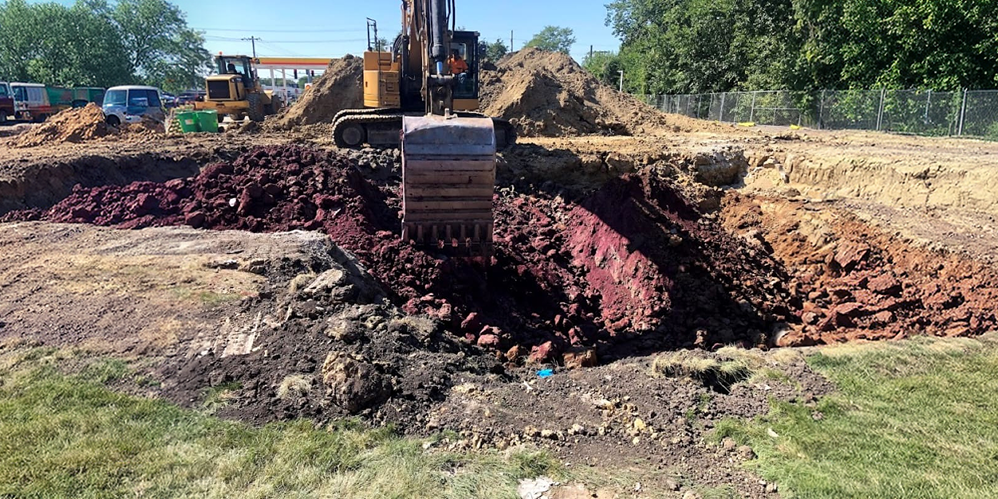
Ex-situ remediation removes the soil first. It’s excavated, then either treated on or off site, or transported to a permitted disposal facility. The excavation is then backfilled with clean material.
Most people picture the second one, because “dig it up and haul it away” is easy to understand. But on a lot of sites, especially active ones with buildings, utilities, or deep contamination, treating in place is the more practical path. Our soil remediation services and in-situ remediation services cover both.
Ex-Situ Methods: Dig First, Then Treat or Dispose
- Excavation and off-site disposal. The most common method. Contaminated soil is dug out, characterized through sampling, and transported to a landfill permitted to accept it. It’s the fastest route to a confirmed result, but you pay for hauling, disposal, and clean backfill, and the work puts trucks on the road for the duration.
- Soil washing. Contaminants tend to cling to the smallest soil particles (silts and clays). Washing separates those fines from the coarser sand and gravel, so only a fraction of the volume needs expensive disposal.
- Thermal desorption. Excavated soil is heated so contaminants like fuel compounds and solvents vaporize out of it, and the vapors are captured and treated.
- Biopiles and landfarming. For petroleum-impacted soil, excavated material is placed in aerated piles or spread in beds, and naturally occurring microbes break the contamination down.
One thing to know up front: if excavated soil tests as hazardous waste, it generally has to be treated to specific standards before it can be landfilled. Characterizing the soil early keeps that from becoming a mid-project surprise. We cover that process in our guide to waste profiling and disposal.
In-Situ Methods: Treat It Where It Sits
- Soil vapor extraction (SVE). Vacuum wells pull contaminant vapors out of the soil above the water table. It’s a standard tool for gasoline, solvents, and other volatile compounds. ERC designs and installs these through its remedial system installation
- In-situ chemical oxidation (ISCO). An oxidant is injected into the soil or groundwater to chemically break contaminants down into less harmful compounds. It can reach contamination that’s too deep or too inconvenient to dig.
- Enhanced bioremediation. Oxygen, nutrients, or specialized microbes are added to speed up natural biodegradation. It works well for petroleum hydrocarbons, though it’s slower than the other options.
- Soil mixing, stabilization, and solidification. Binding agents are blended directly into the soil to lock contaminants in place and reduce their ability to leach. It’s a common choice for metals and some industrial residues.
How the Right Method Gets Chosen
There’s no formula that spits out a winner. A remediation plan weighs several factors at once:
- What the contaminant is. Fuel, chlorinated solvents, heavy metals, PAHs, and PCBs each respond to different treatments. Metals, for example, can’t be “destroyed,” only removed or immobilized.
- Soil type. Sandy, permeable soil lets vapors and injected fluids move easily. Dense clay fights both, which can make digging the better option.
- Depth and extent. Shallow, well-defined contamination is easy to excavate. Deep or widespread contamination under a building usually isn’t.
- How the site is used. An occupied building, buried utilities, or a business that can’t shut down all push toward in-place treatment.
- Your timeline. Excavation is typically the quickest. In-situ methods can take months or longer, which is fine on some projects and a deal-breaker on others.
- The regulatory target. Your state program sets the cleanup standard you have to hit, and that standard shapes which methods can realistically get you there.
| Ex-situ (dig it up) | In-situ (treat in place) | |
| Speed | Usually faster | Often slower, can take months |
| Disruption | High: trucks, open excavation | Lower: wells, injection points |
| Certainty | High: you can see and sample what’s left | Depends on soil and delivery |
| Best for | Shallow, defined, accessible soil | Deep, widespread, or under structures |
Why Many Sites Use Both
The cleanest answer is often a hybrid. A crew excavates the most heavily contaminated “source area” quickly, then treats the leftover lower-concentration soil or groundwater in place. You get speed where speed matters and lower cost where digging everything would be wasteful.
That’s roughly what happened on the former Standard Products property in Port Clinton, Ohio, a demolition and remediation project for Cooper Tire. ERC served as general contractor, with Hull & Associates as design engineer, and self-performed the in-situ soil mixing along with waste characterization, sampling, and disposal. You can read the details in our Port Clinton project write-up.
What the Process Looks Like, Start to Finish
- Site assessment. Sampling defines what the contaminant is, how concentrated it is, and how far it has spread, both in soil and in groundwater.
- Remedy selection and plan. The consultant or engineer compares options against your regulatory target and proposes a plan, which often needs agency review or approval.
- Mobilization and prep. Utilities are located, access is set up, erosion controls go in, and waste disposal is arranged ahead of time so trucks aren’t waiting on paperwork.
- Treatment or excavation. The selected method is carried out, with field screening to guide how far to dig or when treatment is working.
- Confirmation sampling. Samples from the bottom and sidewalls of an excavation, or from treated areas, show whether the standard has been met.
- Restoration and reporting. Excavations are backfilled and graded, and a report documents the work for the regulator, your lender, or the next buyer.
Common Mistakes That Drive Up Cost
- Choosing a method before understanding the site: A treatment that looks cheap on paper can stall in the wrong soil.
- Skipping early waste characterization: Finding out mid-dig that soil is hazardous changes disposal costs and schedule overnight.
- Ignoring groundwater: Contamination that has reached the water table can’t be solved by digging soil alone.
- Underestimating backfill and haul costs: Clean fill and trucking add up quickly on a large excavation.
- Starting without a clear definition of “done”: If the closure criteria aren’t agreed on up front, crews can end up chasing a moving target.
Questions to Ask Before You Hire
- Who is designing the remediation plan, and does the contractor build it or just advise?
- What cleanup standard does your state program require, and which method gets us there?
- How will you confirm the work is done: confirmation sampling, monitoring wells, or both?
- What are the cost risks, such as more soil than expected, hazardous classification, or groundwater encountered?
Frequently Asked Questions
It depends on the method. Excavation can wrap up in days or weeks once sampling and approvals are done. In-situ methods like bioremediation or oxidation can take several months or longer. The overall timeline also includes assessment, planning, and regulatory review before any field work begins.
No. It avoids hauling and disposal costs, but it can require longer operation, monitoring, and more up-front design. For shallow, accessible soil, excavation is often the more economical option. A site-specific evaluation is the only reliable way to compare.
Sometimes. Capping or other engineered controls can be acceptable where regulators allow it, typically paired with land-use restrictions and long-term maintenance. It contains the contamination rather than removing it, so it isn’t an option on every site or for every contaminant.
It’s sampled and classified first. Non-hazardous soil goes to a permitted landfill or treatment facility. Hazardous soil must meet treatment standards before disposal. Shipping is documented from your site to the final destination.
Often, yes. A consultant or engineer typically assesses the site and designs the remediation plan, and the contractor carries it out. ERC regularly works alongside design engineers and also self-performs the field work, so there’s one accountable crew on site.
