
How Is PFAS-Contaminated Soil Cleaned Up? A Guide for Property Owners and Municipalities
PFAS — the “forever chemicals” showing up in regulatory headlines nationwide — present a different kind of remediation challenge than a typical petroleum release. If your site, or a municipal property you manage, has tested positive for PFAS, this guide explains what the cleanup process actually looks like, how testing works, and what factors determine the right approach for your specific site.
What Makes PFAS Different
PFAS compounds are persistent — they don’t break down naturally the way many petroleum contaminants eventually do, which is exactly why they’ve earned the “forever chemical” label. That persistence means remediation strategy has to be chosen carefully, based on the specific site rather than a standard playbook borrowed from petroleum cleanup work.
PFAS is also unusual in how widely it shows up. Because these compounds were used in everything from firefighting foam to industrial coatings for decades, sites that show PFAS contamination often have no single obvious source — which makes the investigation phase, before any actual remediation begins, especially important to get right.
Testing: What Property Owners Should Know
PFAS testing requires specialized laboratory analysis capable of detecting these compounds at extremely low concentrations — often measured in parts per trillion, far below the detection thresholds used for more conventional contaminants. Not every environmental laboratory offers this level of testing, so confirming lab capabilities is a worthwhile early question if PFAS is a concern for your property.
Because PFAS regulatory thresholds have shifted over recent years and vary by state and use case, a result that would have been considered acceptable under older standards may not meet current guidance. If you’re working from a testing report that’s more than a couple of years old, it’s worth confirming with your consultant whether current standards would produce a different conclusion.
How PFAS-Contaminated Soil Is Actually Remediated
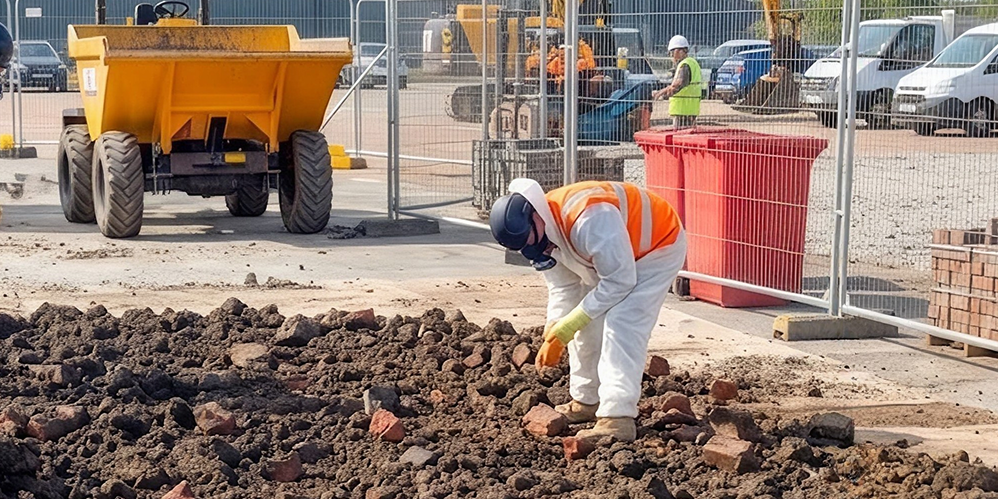
PFAS remediation strategies may include excavation, transportation, and disposal at approved facilities; containment; stabilization; or various treatment technologies. The right solution depends on the concentrations found, the specific site conditions, applicable regulatory requirements, and what the project ultimately needs to achieve — there’s meaningfully more than one valid approach depending on those factors.
Why Disposal Facility Selection Matters More With PFAS
Not every facility that accepts contaminated soil is equipped or approved to accept PFAS-impacted material specifically. Confirming that a disposal facility is properly approved for PFAS waste — and that the waste profile accurately documents the contamination — is a critical step that, if skipped, can create significant liability down the road for the property owner who generated the waste.
Choosing the Right Strategy for Your Site
Because PFAS regulation is still evolving, an experienced remediation partner needs to be current on the standards that apply to your location and property type. This is closely related to the work ERC already does in soil remediation and in-situ treatment, extended to account for PFAS-specific handling and disposal requirements.
What This Means for Municipalities
Municipal properties — parks, public works sites, former fire training areas — are increasingly turning up PFAS in routine testing, often because firefighting foam used on those sites for decades contained the compound. If groundwater is involved as well as soil, that’s a related but distinct scope; see our contaminated groundwater treatment page for how those two often get addressed together on the same site.
Municipalities also face a public communication dimension that private property owners generally don’t: residents and local officials often want to understand what was found, what it means for safety, and what the remediation timeline looks like. A contractor experienced in municipal work can help structure both the technical remediation plan and the supporting documentation needed for that public conversation.
How PFAS Regulation Continues to Evolve
PFAS regulation at both the federal and state level has changed meaningfully over the past several years and continues to develop, with new guidance affecting acceptable concentration levels, testing requirements, and disposal standards. This is one of the fastest-moving areas of environmental regulation right now, which means a remediation strategy that was fully compliant eighteen months ago may need to be re-evaluated against current standards before a project moves forward.
Working With an Experienced Partner
PFAS cleanup isn’t a place to work with a generalist. Look for a contractor who can speak specifically to concentration thresholds, approved disposal facilities, and current regulatory guidance for your site type — the same due diligence covered in our contractor-selection checklist applies here, arguably more so given how quickly the regulatory landscape around PFAS continues to change.
Common Sources of PFAS Contamination
Beyond firefighting foam, PFAS contamination commonly traces back to industrial manufacturing that used the compounds in coatings, textiles, or specialty chemicals; landfills that received PFAS-containing waste before regulations tightened; and, in some cases, biosolids applied to agricultural land. Identifying the likely source — even when it can’t be pinned down exactly — helps focus the investigation and gives context for how concentrated the contamination is likely to be.
What Property Owners Can Do While Regulations Are Still Settling
Given how actively PFAS regulation continues to change, property owners in a position to wait on non-urgent remediation decisions sometimes benefit from doing so — not indefinitely, but long enough to confirm which standards will actually apply to their project. That said, this isn’t a reason to delay testing or basic site characterization; understanding what’s present and at what levels is valuable regardless of which specific cleanup standard eventually applies.
How PFAS Projects Typically Get Sequenced
A typical PFAS project moves through initial testing and source investigation, laboratory confirmation of which compounds and concentrations are present, strategy selection based on regulatory requirements and site goals, remediation or containment work itself, and confirmation sampling before closure. Because lab turnaround for PFAS-specific analysis can take longer than standard contaminant testing, building realistic time into the investigation phase avoids a false start on a remediation strategy that later needs revisiting once full results come back.
ERC coordinates this full sequence directly with clients, from initial sampling logistics through excavation, transportation, and disposal at approved facilities — adjusting the plan as needed if lab results show a different concentration or extent than initially expected.
Frequently Asked Questions
PFAS remediation strategies may include excavation, transportation, disposal at approved facilities, containment, stabilization, or treatment technologies. The appropriate solution depends on concentrations, site conditions, regulatory requirements, and project objectives.
Yes. PFAS compounds are persistent and don’t break down the way many petroleum contaminants do, so remediation strategy has to be selected specifically for the site rather than applying a standard petroleum-cleanup approach.
Firefighting foam used at fire training areas and public works sites for decades commonly contained PFAS compounds, which is why municipal properties frequently turn up PFAS in routine testing even without an obvious industrial source.
No. Not every facility that accepts contaminated soil is approved to accept PFAS-impacted material specifically. Confirming a facility’s approval status and accurately documenting the waste profile is a critical step in PFAS remediation.
PFAS testing requires specialized laboratory analysis capable of detecting compounds at extremely low concentrations, often measured in parts per trillion. Not every environmental laboratory offers this level of testing, so lab capability should be confirmed early.
Beyond firefighting foam, common sources include industrial manufacturing that used PFAS in coatings or specialty chemicals, landfills that received PFAS-containing waste before regulations tightened, and in some cases biosolids applied to agricultural land.
A typical project moves through initial testing and source investigation, laboratory confirmation of compounds and concentrations, strategy selection, remediation or containment work, and confirmation sampling before closure. PFAS-specific lab turnaround can take longer than standard testing, so this should be built into the project schedule.
