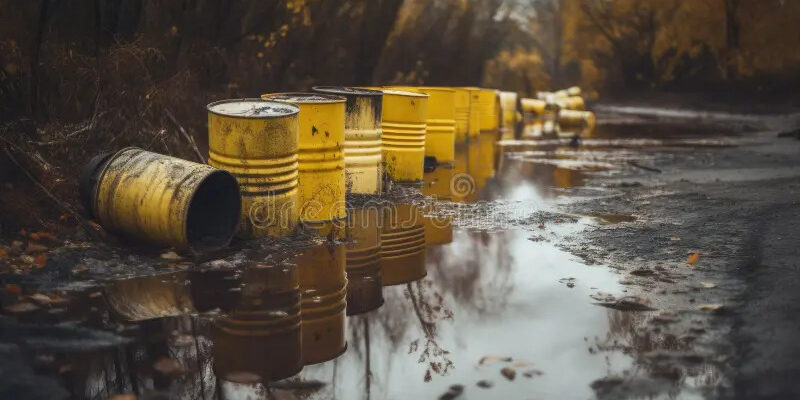
After a spill, every piece of contaminated material goes through a set sequence before it leaves the site. That includes recovered liquid, used absorbents, soil, rinse water and protective gear. It is collected and containerized, then characterized to find out whether it is hazardous. Next it is profiled with an approved disposal facility, labeled, manifested and hauled by a licensed transporter. Finally it is treated, recycled or disposed of at a permitted facility. The company that spilled it is the generator, and it remains responsible for that waste from “cradle to grave.” Environmental Remediation Contractor (ERC) manages this process for our emergency response clients. Here is how it works.
Step 1: Collection and Containerization
Cleanup crews separate waste streams at the scene, because mixing them can turn a cheap, non-hazardous stream into an expensive hazardous one. Typical streams include:
- Recovered liquids: fuel, oil, chemicals or water, collected in vacuum trucks, tanks or totes
- Absorbents and debris: pads, booms, granular absorbent and personal protective equipment, in drums or roll-off boxes
- Contaminated soil: excavated and stockpiled on plastic, or loaded directly into lined roll-offs or dump trailers
- Wash and rinse water: from decontaminating pavement, floors and equipment
Containers are closed, labeled with the contents and the date, and stored securely while the waste is characterized.
Step 2: Waste Characterization
Under federal RCRA rules, the generator must determine whether a waste is hazardous. There are two ways a waste can qualify:
| Type | What it means | Examples |
| Listed waste | Appears on one of EPA’s F, K, P or U lists | Certain spent solvents, discarded unused commercial chemicals |
| Ignitable | Flash point below 140°F, among other criteria | Gasoline, many solvents |
| Corrosive | pH of 2 or less, or 12.5 or more | Strong acids and caustics |
| Reactive | Unstable, reacts violently or releases toxic gases | Certain cyanide or sulfide wastes |
| Toxic | Fails the TCLP leaching test for specific contaminants | Soil with leachable lead, benzene or certain pesticides |
Characterization uses product knowledge, such as safety data sheets, and laboratory analysis. Spill material often keeps the identity of the product that spilled. Gasoline-soaked absorbents, for example, are likely ignitable. Contaminated soil is usually sampled and tested. Many petroleum-impacted soils turn out to be non-hazardous special waste that can go to an approved landfill. That is a much lower cost than hazardous waste disposal.
Step 3: Waste Profiling
Before a disposal facility accepts any waste, it requires a waste profile. This is a document describing where the waste came from, its composition and its test results. The facility reviews and approves the profile before the first load ships. Our article on what a waste profile is and why it matters covers this step in detail. ERC prepares profiles for our clients and works with a network of facilities to find the right destination for each stream.
Step 4: Manifesting and Transport
Hazardous waste travels under the Uniform Hazardous Waste Manifest, now usually handled through EPA’s e-Manifest system. The manifest tracks the waste from the generator, through the transporter, to the receiving facility. Each party signs it. The generator needs an EPA ID number. Episodic generators, such as a company that rarely creates hazardous waste and now has a one-time spill, may be able to get an emergency or provisional ID from their state. Non-hazardous waste moves on a bill of lading or a non-hazardous manifest. Hazardous waste must be hauled by a transporter that meets DOT hazardous materials requirements.
Step 5: Treatment, Recycling or Disposal
Where the waste ends up depends on what it is:
- Used oil and recoverable fuel can often be recycled or blended for fuel
- Petroleum-impacted soil often goes to a Subtitle D landfill as approved special waste, or to a thermal treatment facility
- Hazardous liquids and solids go to a permitted treatment, storage and disposal facility (TSDF) for incineration, stabilization or other treatment
- Wastewater may be treated and discharged under a permit, or shipped for off-site treatment
The receiving facility returns a signed copy of the manifest, and often a certificate of disposal or destruction. The generator should keep hazardous waste manifests for at least three years. Many companies keep them much longer, because generator liability doesn’t expire.
Why ``Cradle to Grave`` Matters to You
Hiring a contractor doesn’t transfer your responsibility for the waste. If a hauler dumps it illegally, or a facility mishandles it, the original generator can still be liable for the cleanup. That is why it matters who handles your waste: a contractor with licensed transporters, vetted facilities and complete paperwork protects you long after the spill is cleaned up.
ERC handles spill waste from collection through final disposal. We also offer scheduled drum pickup and waste disposal for facilities that accumulate waste routinely. Learn more about the materials we handle in our guide to HAZMAT and the 9 hazard classes, or about our work with waste management and recycling operations.
Have spill waste, drums or contaminated soil that needs to go? Request a drum pickup or disposal estimate, or call ERC at (614) 769-6535. For active spills, call 8776837724, 24/7.
Frequently Asked Questions
No. It depends on what spilled and what the testing shows. Many fuel- and oil-impacted soils and absorbents are non-hazardous special waste. Spills of listed chemicals or ignitable, corrosive, reactive or toxic materials usually produce hazardous waste.
Generally, the company responsible for the spill: the facility owner, the operator or the carrier. The generator signs the manifest and stays responsible for the waste even after a contractor removes it.
Simple profiles based on known materials can be approved in a day or two. Profiles that need laboratory analysis, such as TCLP testing of soil, typically take several days to two weeks, depending on lab turnaround and facility review.
It is the tracking document, now usually electronic, that follows hazardous waste from the generator to the transporter to the receiving facility. Each party signs it, and the generator keeps a copy for at least three years.
Yes, in closed, labeled and secure containers. Hazardous waste storage time limits depend on your generator status, so schedule disposal promptly once profiles are approved.
It depends on the volume, how hazardous the waste is, and the transport distance. Non-hazardous soil is far cheaper to dispose of than hazardous liquids. Segregating waste streams during cleanup is one of the best ways to keep costs down.
