Public Park Stream Restoration & Water Quality Improvement
Toledo, Ohio | Stream Restoration | Streambank Stabilization | Grade Control | Stormwater Improvements
Environmental Remediation Contractor (ERC) served as the prime environmental contractor for a stream restoration project in a public park in Toledo, Ohio.
The project set out to improve water quality and restore long-term stream function. That meant rebuilding the channel, upgrading stormwater infrastructure, stabilizing eroding banks, and restoring native habitat, all while the stream kept flowing and the park stayed open.
ERC completed all contract and change-order work, adapting to repeated flooding during construction. The restored stream has performed well since completion, and native vegetation has established throughout the project area.
Project at a Glance
- Location: Toledo, Ohio
- Client: Municipal government
- Engineer: Environmental engineering firm
- Prime Environmental Contractor: Environmental Remediation Contractor (ERC)
- Contract Value: over $840,000
Key Project Results
- 8,674 cubic yards of streambank excavation
- 3,536 cubic yards of fill placed
- 340 linear feet of toe wood with brush layering
- 2,022 native woody plantings installed
- Boulder cross vanes, double-drop cross vanes, and a log cascade built
- All contract and change-order work completed
- Stable performance and native vegetation established after construction
Why Did This Park Stream Need Restoration?
The stream was eroding, and its condition was affecting water quality downstream. Restoring it would reduce erosion, improve habitat, and give the channel the structure it needs to stay stable for the long term.
How Do You Restore a Stream Channel?
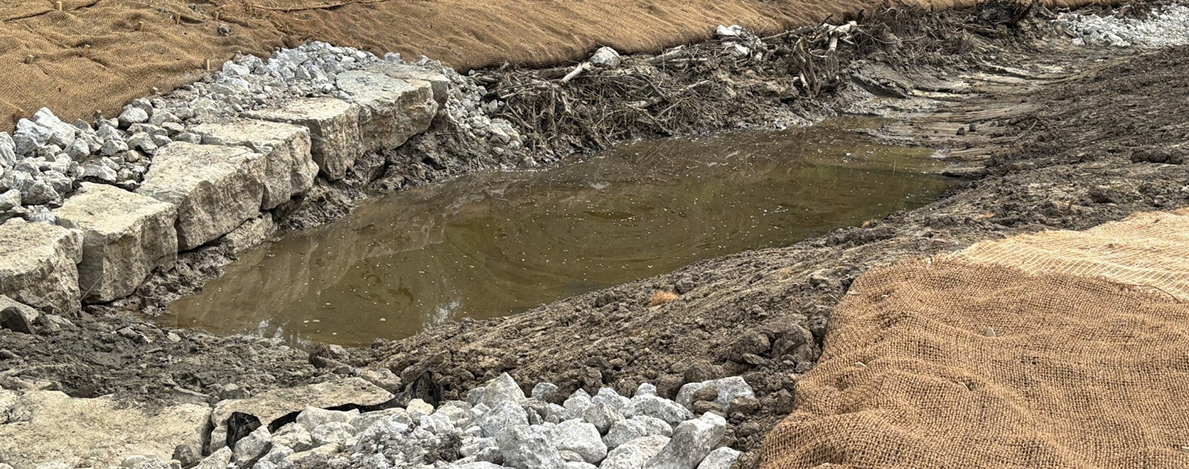
ERC reconstructed the channel and installed grade-control features that hold the streambed in place and manage how water moves through it.
Those features included boulder cross vanes, double-drop boulder cross vanes, a log cascade, flagstone channel protection, rock-reinforced riffles, and a constructed rock bluff. ERC also completed stormwater infrastructure improvements along the corridor.
How Was Water Managed During Repeated Flooding?
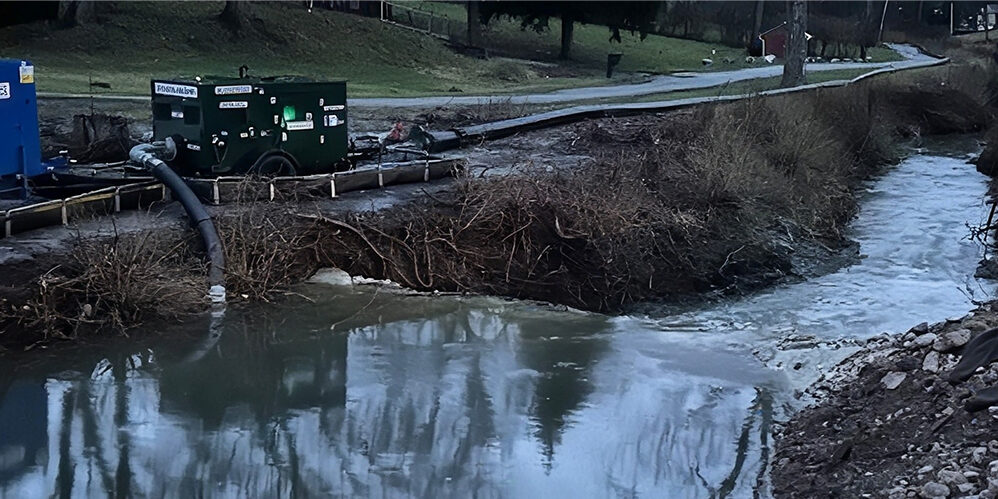
Repeated rain events raised stream flows and flooded active work areas more than once.
ERC upsized its dewatering pumps and actively managed the higher water volumes. That kept the site workable and protected features that had already been built.
How Were the Streambanks Stabilized?
ERC installed 340 linear feet of toe wood with brush layering. This nature-based technique uses logs and live branches to armor the bank toe and root into the soil over time.
The banks were then revegetated with native seed and 2,022 woody plantings.
Why Was This Project Complex?
ERC had to manage several conditions at once:
- Active stream flows throughout construction
- Repeated flooding of work areas
- Multiple types of grade-control structures
- Stormwater infrastructure upgrades
- Streambank stabilization with natural materials
- Protecting park resources and public access
- Native habitat restoration
Who Performs Stream Restoration for Cities in Ohio?
Urban stream restoration should be handled by contractors with ecological earthwork experience, strong water management skills, and the ability to work safely in public spaces.
ERC performs stream restoration, bank stabilization, grade-control installation, and stormwater improvements for municipalities, park districts, conservation organizations, and engineers across Ohio and the region.
What Services Did ERC Provide on This Project?
- Stream Restoration
- Channel Reconstruction
- Water Management and Dewatering
- Grade-Control Installation
- Streambank Stabilization
- Stormwater Infrastructure Improvements
- Native Seeding and Revegetation
Planning a Stream Restoration Project?
Environmental Remediation Contractor provides field execution for stream restoration, from water management and channel work through bank stabilization and planting.
ERC works with conservation organizations, public agencies, park districts, engineers, and ecological consultants to turn restoration designs into working habitat.