Streams get straightened. Wetlands get drained. Shorelines get hardened with concrete and left to erode anyway. Over decades, those changes add up to muddy water, flooded basements, and fewer fish and birds.
Ecological restoration is the work of reversing that. It means rebuilding the physical structure of a damaged landscape so it can function again: moving water properly, filtering pollution, and supporting living things. This guide covers what restoration actually involves, the main project types, how a project unfolds, and who pays for it.
What Ecological Restoration Actually Means
Restoration is different from simple cleanup or landscaping. Cleanup removes contamination. Landscaping makes something look nice. Restoration rebuilds how a natural system works: the channel shape of a stream, the way a wetland holds water, the plants that anchor a bank.
The goal isn’t to freeze a place in time. It’s to give a damaged ecosystem the physical conditions it needs to recover and then largely take care of itself. That’s why restoration projects pair earthwork and engineering with native plant establishment and follow-up monitoring.
The Main Types of Restoration Projects
Stream and river restoration
Streams that have been straightened, buried in culverts, or cut deep into their banks lose their ability to move sediment and flood water safely. Restoration rebuilds a stable channel with riffles and pools, reconnects it to a floodplain, and stabilizes banks. We go deeper in our guide to how stream restoration improves water quality.
Wetland creation and restoration
Wetlands filter nutrients and sediment, store floodwater, and shelter wildlife. Restoration can bring back a drained wetland or build a new one, including constructed wetlands designed to treat water.
Shorelines, reservoirs, and canals
Eroding lake and canal edges lose land and dump sediment into the water. Shoreline work uses grading, rock, plantings, and bioengineering to hold the edge in place while restoring habitat. See our reservoir, dam, canal, and shoreline services.
Slopes and streambanks
Where a steep bank is failing, slope and bank stabilization protects property while rebuilding vegetation.
Dam removal
Taking out an obsolete dam can reconnect a river, remove a safety hazard, and restore natural flow. It’s a restoration project of its own, and we cover it separately in our dam removal guide.
How a Restoration Project Unfolds
- Assessment and design: Engineers and ecologists study the site: hydrology, soils, existing habitat, and what’s driving the problem. The design sets out the new channel, wetland, or bank.
- Permitting: Work in streams and wetlands generally involves federal Clean Water Act Section 404 authorization, state water quality certification, and often local or state approvals. Permitting timelines are a real part of the schedule.
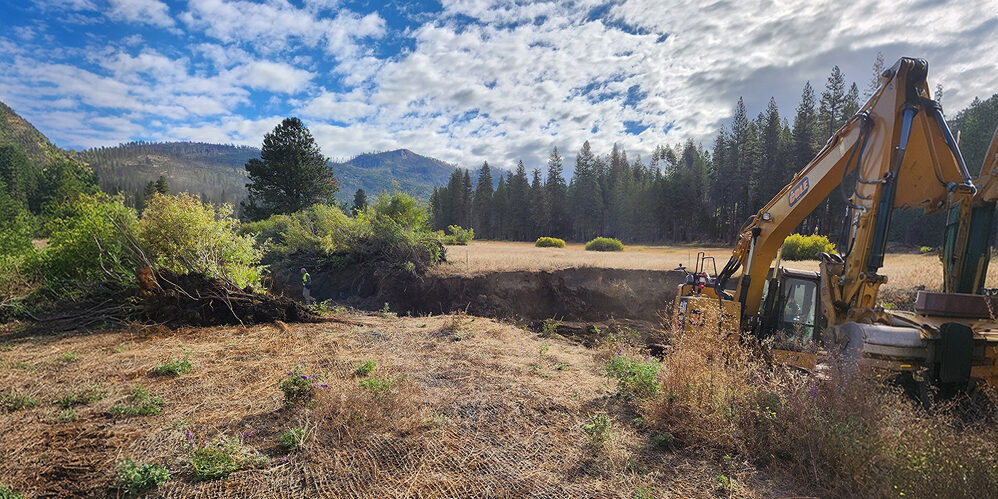
- Construction: Heavy equipment shapes the new landscape: grading, placing rock and log structures, building floodplain benches, and installing erosion protection. Good crews protect surrounding areas as they work.
- Planting: Native trees, shrubs, grasses, and wetland plants stabilize the new surfaces and rebuild habitat.
- Monitoring and establishment. Restoration isn’t done the day the equipment leaves. Multi-year monitoring is common to confirm vegetation takes hold and structures hold up.
Signs Your Site Could Benefit From Restoration
- A stream that’s cut deeply into its banks or keeps shifting course
- Eroding shorelines that lose a little more land every year
- A drainage ditch or culvert that floods the same area repeatedly
- A former wetland or floodplain that’s been drained or filled
- A pond or impoundment filling with sediment or growing algae
- A required mitigation obligation tied to other development work
Common Mistakes That Undermine Restoration
- Treating symptoms only: Armoring a failing bank with rock can move the problem downstream if the cause is upstream flow or lost floodplain.
- Skipping the watershed: A stream responds to everything draining to it, so design has to account for the flows it will actually see.
- Underestimating planting: Plants are structural, not decoration. Wrong species, poor timing, or no follow-up watering and weed control can undo good earthwork.
- Ignoring maintenance: Even natural systems need a few years of attention while they establish.
- Leaving the contractor out of design: Buildability, access, and cost often look different on the ground than on paper.
How to Prepare for a First Conversation
You don’t need a finished design to start. It helps to gather:
- A map or address, and who owns the land and any easements
- Any existing surveys, studies, or engineering reports
- Photos of the problem, ideally after a rain event
- Your goals: stabilize a bank, create habitat, meet a requirement, or improve water quality
- Any funding source and its deadlines
ERC offers design-build and construction-only roles on restoration work, so the first call can happen whether you have a design in hand or are still figuring out the problem. You can see more completed work on our projects page.
What Restoration Looks Like on the Ground
A few real examples show how this plays out:
- McCammon Creek, Delaware County, Ohio: For Preservation Parks of Delaware County, ERC and design engineer Burgess & Niple realigned two unnamed tributaries to Alum Creek and stabilized eroding streambanks, building two new stream reaches of 500 and 1,600 feet with a new floodplain. Abandoned channel reaches became added wetlands, and substrate harvested from the old channels was reused in the new ones. See the McCammon Creek project.
- Brooks Park, Buckeye Lake, Ohio: Working with the ODNR Division of Parks & Watercraft, ERC improved stream habitat along Murphy’s Run and connected it to an off-channel wetland to reduce nutrients and pollutants reaching Buckeye Lake, as part of Ohio’s H2Ohio initiative.
- Tait Station low-head dam, Dayton, Ohio: ERC removed an 83-year-old, 569-foot-long dam on the Great Miami River. Read more in the Tait Station project write-up.
Who Pays for Restoration?
Restoration is funded in a few common ways. Municipalities and park districts often fund projects through capital budgets and grants. Landowners and developers may restore streams or wetlands to satisfy mitigation requirements for other work. State and federal programs, including water-quality initiatives like Ohio’s H2Ohio, can fund projects that reduce nutrient and sediment pollution. Many projects stack more than one source.
Because funding often comes with deadlines and reporting rules, it helps to bring in a contractor early, before the design is locked, so construction realities inform the plan.
Restoration Terms You'll Hear
- Riparian buffer: the strip of native vegetation along a stream or shoreline that shades water, filters runoff, and holds banks together.
- Floodplain bench: a flat area built beside a channel so high water can spread out instead of scouring the banks.
- Riffle and pool: the shallow, fast sections and deeper, slower sections of a healthy stream. Together they aerate water and shelter fish.
- Mitigation: restoration done to offset unavoidable impacts to streams or wetlands elsewhere.
- Section 404 and 401: the federal permit for placing material in waters of the U.S., and the state water quality certification that goes with it.
- Design-build: one team handles both design and construction, which can shorten schedules and reduce handoff problems.
Frequently Asked Questions
Ecological restoration is the process of rebuilding the physical structure and function of a damaged ecosystem, such as a stream, wetland, or shoreline, so it can recover and sustain itself. It combines engineering, earthwork, native planting, and monitoring.
Remediation removes or treats contamination in soil, water, or air. Restoration rebuilds a landscape’s natural form and function. Some projects involve both, such as cleaning up a contaminated site and then restoring the stream beside it.
Construction on a typical stream or wetland project often runs weeks to a few months, but design, permitting, and funding can take much longer. Monitoring continues for years after construction.
Usually, yes. Work in streams, wetlands, and other waters typically involves federal Clean Water Act Section 404 authorization and state water quality certification, plus state and local approvals. Requirements vary by state and project.
Yes. ERC works across Ohio, Illinois, Indiana, Kansas, Kentucky, Michigan, Missouri, Pennsylvania, and Wisconsin, and has completed projects in Kentucky, including a golf course sinkhole and 2,200 linear feet of stream restoration in Lexington.
