H2Ohio Wetland Restoration on Former Farmland
Galloway, Ohio | Wetland Restoration | Mass Earthwork | Water-Level Control | Native Habitat
Environmental Remediation Contractor (ERC) served as the prime environmental contractor for a wetland restoration project on former agricultural land in Galloway, Ohio.
Old drainage systems and site grading kept the land from holding water. The project set out to improve water retention and restore wetland function, with funding through Ohio’s H2Ohio program.
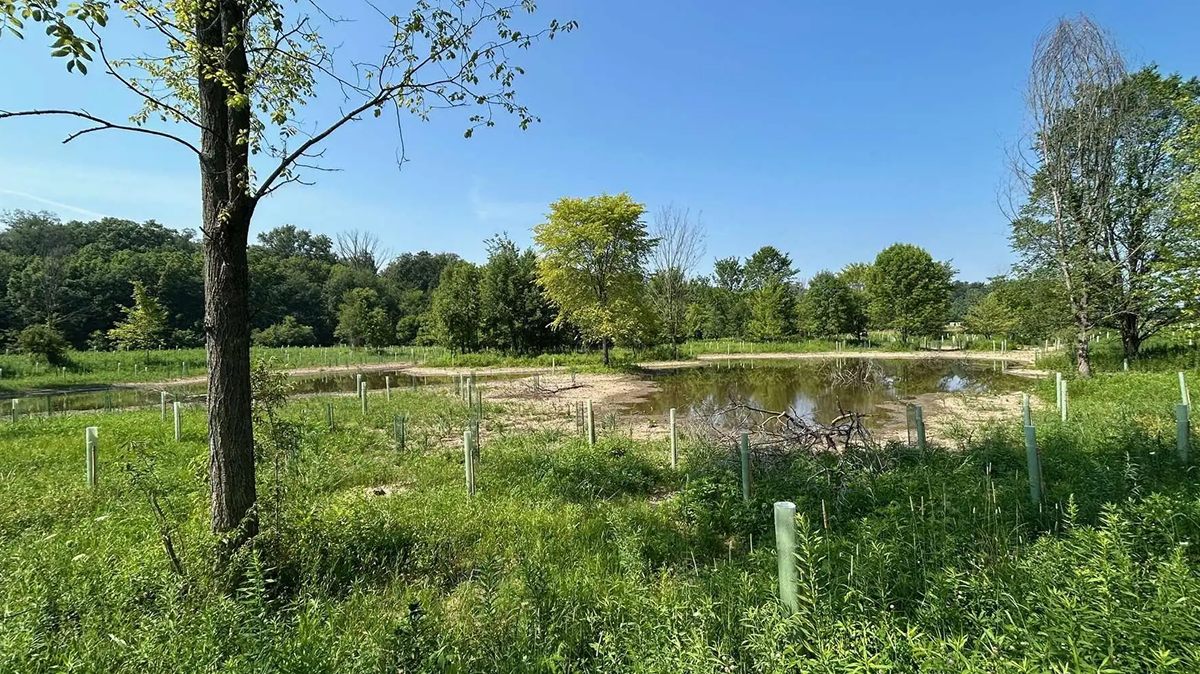
ERC self-performed the major construction, moving 18,446 cubic yards of material, modifying drainage, and establishing native vegetation across 21 acres.
Project at a Glance
- Location: Galloway, Ohio
- Client: County soil and water conservation district
- Engineer: Ecological design consultant
- Prime Environmental Contractor: Environmental Remediation Contractor (ERC)
- Funding Program: H2Ohio
Key Project Results
- 18,446 cubic yards of excavation and onsite placement
- 8,873 cubic yards of topsoil stripped and replaced
- 21 acres of wetland and upland seeding
- 1,814 linear feet of 6-inch and 12-inch drainage pipe installed
- Clay trench plugs and a water-level control structure built
- Trees, shrubs, and wetland plugs installed, plus invasive species control
What Is the H2Ohio Program?
H2Ohio is a state water quality initiative that funds projects to reduce nutrient runoff and improve Ohio’s waterways. Wetlands help by slowing water down and filtering it before it reaches streams and lakes.
How Do You Restore Water Retention on Farmland?
Farm drainage is built to move water off the land fast. ERC reversed that by installing clay trench plugs to block old drain lines and adding a water-level control structure to manage how much water the wetland holds.
How Was the Wetland Graded?
ERC excavated and placed 18,446 cubic yards of material on site and stripped and replaced 8,873 cubic yards of topsoil.
The grading created depressions and hummocks, giving the wetland varied surface elevations that hold water and support more diverse habitat.
How Did ERC Handle Rainy Conditions?
Rain was the biggest construction challenge. ERC kept production going by moving material quickly whenever site conditions allowed.
How Was the Site Planted?
ERC completed wetland and upland seeding across 21 acres, installed trees, shrubs, and wetland plugs, and carried out invasive species control.
Why Was This Project Complex?
ERC had to manage several conditions at once:
- Mass earthwork on wet ground
- Old agricultural drainage systems
- Water-level control installation
- Topsoil stripping and replacement
- Frequent rain delays
- Native planting and invasive species control
Who Builds H2Ohio Wetland Projects?
H2Ohio and similar public wetland projects need contractors who can self-perform large earthwork and meet program and stormwater requirements.
ERC builds wetland restoration projects for soil and water conservation districts, public agencies, and conservation organizations across Ohio and the region.
What Services Did ERC Provide on This Project?
- Wetland Restoration
- Mass Earthwork and Grading
- Topsoil Stripping and Replacement
- Drainage Infrastructure Installation
- Clay Trench Plugs and Water-Level Control Structures
- Erosion and Sediment Control
- Native Seeding, Planting, and Invasive Species Control
Planning a Publicly Funded Wetland Project?
Environmental Remediation Contractor provides self-performed wetland construction, from earthwork and drainage control through planting.
ERC works with conservation organizations, public agencies, park districts, engineers, and ecological consultants to turn restoration designs into working habitat.