Mohican River Low-Head Dam Removal & River Restoration
Brinkhaven, Ohio | Dam Removal | In-Stream Demolition | River Restoration | Riparian Planting
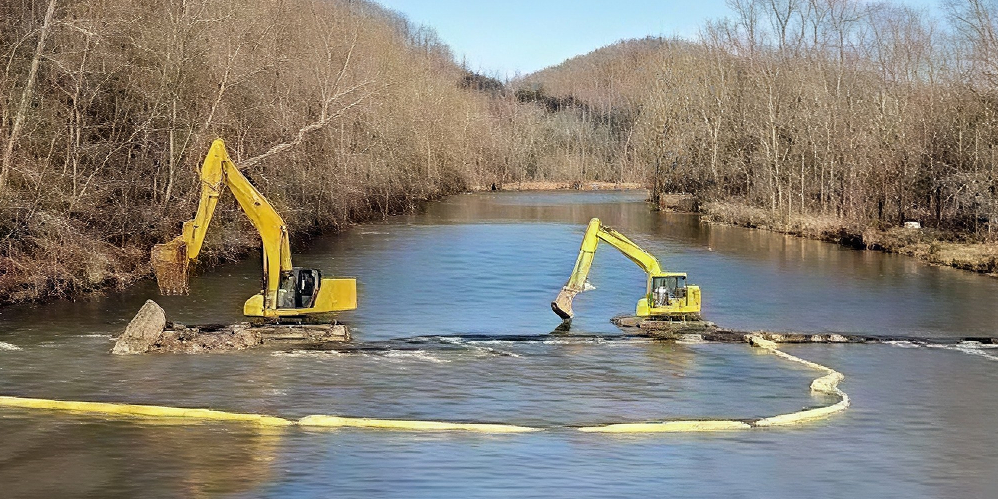
Environmental Remediation Contractor (ERC) served as the prime contractor for the removal of a low-head dam on the Mohican River in Brinkhaven, Ohio.
The dam blocked the river and stood in the way of stream mitigation goals for the Mohican Watershed. Removing it called for controlled in-stream demolition, careful handling of concrete and riverbed material, and strong water-quality protection in a sensitive river corridor.
ERC removed the dam, regraded the riverbed, and replanted the banks, restoring free-flowing conditions through the former dam reach with zero safety incidents.
Project at a Glance
- Location: Brinkhaven, Ohio
- Client: National conservation nonprofit
- Engineer / Consultant: Ecological design consultant
- Prime Contractor: Environmental Remediation Contractor (ERC)
- Contract Value: nearly $200,000
 Key Project Results
- Low-head dam fully removed
- 380 cubic yards of concrete disposed
- 350 cubic yards of riverbed material excavated and placed
- 809 trees, shrubs, and live stakes planted
- Free-flowing river conditions restored
- Zero safety incidents
Why Remove a Low-Head Dam?
Low-head dams block fish and other aquatic life from moving up and down a river. They also trap sediment and create dangerous currents for people on the water.
Removing this dam reconnected the Mohican River and supported stream mitigation goals for the watershed.
How Is a Dam Removed From a River?
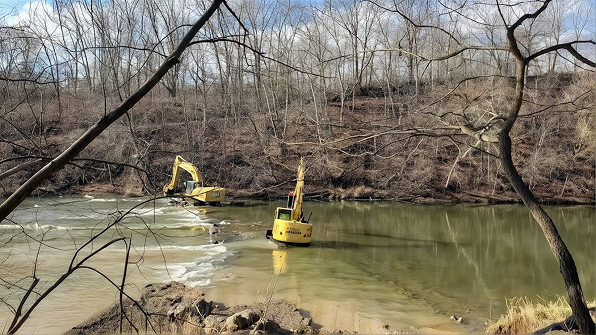
ERC used a phased approach, demolishing the structure in stages with excavators and hydraulic demolition equipment. Temporary access and staging areas were set up so equipment could work safely in the river.
Concrete debris was loaded out and managed as the work progressed, totaling 380 cubic yards.
How Was the River Protected During Demolition?
Working in a river means sediment control has to be in place from day one. ERC used turbidity controls, silt fence, filter sock, seeding, and coir matting to protect water quality throughout construction.
What Happens to the River After the Dam Is Gone?
ERC excavated and placed 350 cubic yards of riverbed material to shape the channel through the former dam reach.
The banks were replanted with 809 bare-root trees, shrubs, and live stakes, and disturbed areas were stabilized to support long-term channel stability and riparian habitat.
Why Was This Project Complex?
ERC had to manage several conditions at once:
- In-stream demolition in an active river
- Phased removal of a concrete structure
- Concrete and riverbed material handling
- Water-quality and turbidity protection
- Temporary access in a sensitive corridor
- Riparian restoration after removal
Who Removes Dams in Ohio?
Dam removal should be handled by contractors with in-stream demolition experience, strong safety programs, and the ability to protect water quality while working in the river.
ERC performs dam removal, in-stream demolition, river grading, and riparian restoration for conservation organizations, public agencies, and engineers across Ohio and the region.
What Services Did ERC Provide on This Project?
- Dam Removal
- In-Stream Demolition
- Concrete Debris Management
- Riverbed Excavation and Grading
- Erosion, Sediment, and Turbidity Control
- Riparian Planting
- Site Stabilization and Restoration
Planning a Dam Removal?
Environmental Remediation Contractor provides safe, controlled dam removal, from in-stream demolition through riverbed grading and riparian planting.
ERC works with conservation organizations, public agencies, park districts, engineers, and ecological consultants to turn restoration designs into working habitat.